Cat Bite Wounds: Why a Small Puncture Needs a Full Assessment
Learn why veterinary bite-wound assessment looks beyond skin size, and how stability, contamination and tissue health affect treatment decisions.
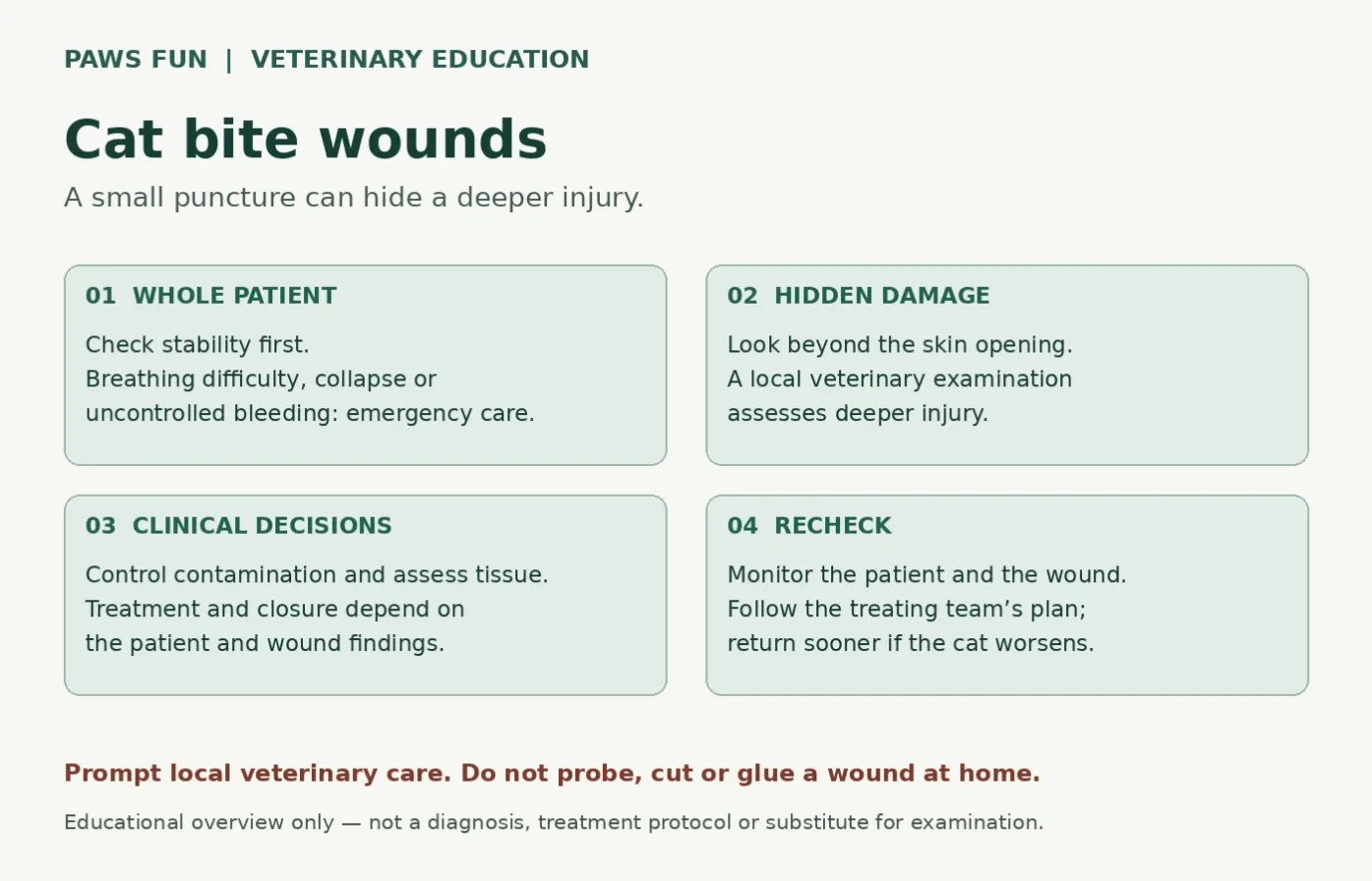
A small puncture after a fight can conceal a more serious injury. Known bite wounds need prompt local veterinary assessment; breathing difficulty, collapse or uncontrolled bleeding require emergency care. This educational literature review was checked on 19 November 2026. It does not diagnose an individual animal or replace examination and local emergency services.
Quick Answer
A veterinarian assesses the whole patient before deciding what the skin wound needs. Hidden damage, contamination and tissue viability can matter more than the visible opening. Closing the skin quickly is not always the safest endpoint.
Red flags and the unseen injury
The American Red Cross feline bite guidance warns that a minor-looking bite can overlie substantial damage. Lethargy, poor appetite, swelling and pain can accompany infection. A cat shaken by a dog needs assessment for internal trauma. Do not delay because the animal’s coat hides the wound or the visible bleeding stopped.
Do not squeeze, probe, glue or cut a suspected bite wound at home. Avoid forceful handling that risks another bite. Arrange transport and follow the local veterinary team’s instructions. An online photograph cannot exclude deeper injury.
Why surface size does not determine the plan
The Merck Veterinary Manual’s specific-wound guidance distinguishes penetrating cat bites from the crushing and tearing damage possible with dog bites. Examination after stabilization may reveal a wider injured area than the original puncture suggests. The clinical question is what tissue has been damaged and contaminated, not simply how many stitches fit the opening.
Clinical question | How it changes care |
|---|---|
Is the patient stable? | Systemic assessment and stabilization take priority over skin repair |
What lies beneath the opening? | Depth and damaged structures influence exploration and repair |
Is tissue viable and contamination controlled? | Findings influence removal of damaged tissue and timing of closure |
Is an abscess or another skin condition present? | Cause-based treatment differs; appearance alone is insufficient |
Is recovery progressing? | Repeat examination may change the wound-management plan |
Hospital treatment: control the problem before sealing the surface
Merck’s initial wound-management reference explains that lavage removes contamination and improves inspection, while debridement removes nonviable tissue. Pain relief supports care. Infection assessment can include culture to guide antimicrobial decisions. A contaminated wound may need drainage, open management or delayed closure rather than immediate sealing. These are clinician-performed decisions, not home instructions.
The team monitors the patient and wound response. Continued contamination or uncertain tissue health may require staged reassessment. A change in closure timing does not by itself mean that the original care failed; the decision follows the condition of the tissue and patient.
Differentials and follow-up
Cornell’s feline skin-disease overview emphasizes history, examination and cause-specific testing. Abscess, allergy and other skin problems are not interchangeable. For a cat with a swelling, the veterinarian determines whether it is related to a bite and whether drainage and antimicrobial treatment are indicated. Outdoor access and fighting history provide context, not a diagnosis.
Ask when the next examination is due and which changes require an earlier return. No fixed healing date is promised. Persistent swelling, pain, discharge or worsening general condition warrants reassessment.
TCVM and cosmetic-care boundaries
This review establishes no wound-healing benefit from TCVM interventions or grooming cosmetics. Herbs, acupuncture or traditional pattern explanations cannot replace trauma assessment, drainage or infection control. Any adjunct requires a separate evidence and safety review with the treating veterinarian. Do not apply PAWS FUN shampoos, foams or balms to a bite wound as treatment.
FAQ
Can a closed puncture be ignored?
Can remote consultation decide whether closure is needed?
No. Online consultation can support later discussion of records, but cannot replace an examination or urgent local care.Is this a reported PAWS FUN clinical case?
No. This is a literature review; no individual clinical case is reported.
Business enquiries, separate from clinical care: Start Your OEM/ODM Project · Become Our Distributor. pawsfuntd@gmail.com · WhatsApp +86 185 8884 5736.