Cat Foam OEM: Define the Cleaning Task Before the Formula
Build a specific cat-foam OEM brief covering cleaning area, soil, handling and instruction boundaries before comparing samples.
On 9 November 2026, All Paws Industry reported The Paws Lab’s stockist expansion across retail and grooming businesses. Its own website presents daily-care routines and a stockist directory. Checked 19 November, these support the channel context; they do not independently validate the report’s sales or performance claims. The sourcing lesson is to make the between-bath task specific before choosing a formula.
Quick Answer
For a cat foam OEM project, write down the intended cleaning area, the kind of soil and the approved removal routine before comparing samples. No-rinse is a use direction, not a promise that a foam replaces every bath or is appropriate for an irritated or wounded area.
Start Your OEM/ODM Project — Request the 150 mL cat foam reference with a proposed use-task brief. Include country, channel, first-order quantity per SKU, intended area and customer routine.
Choose one use case that packaging can explain
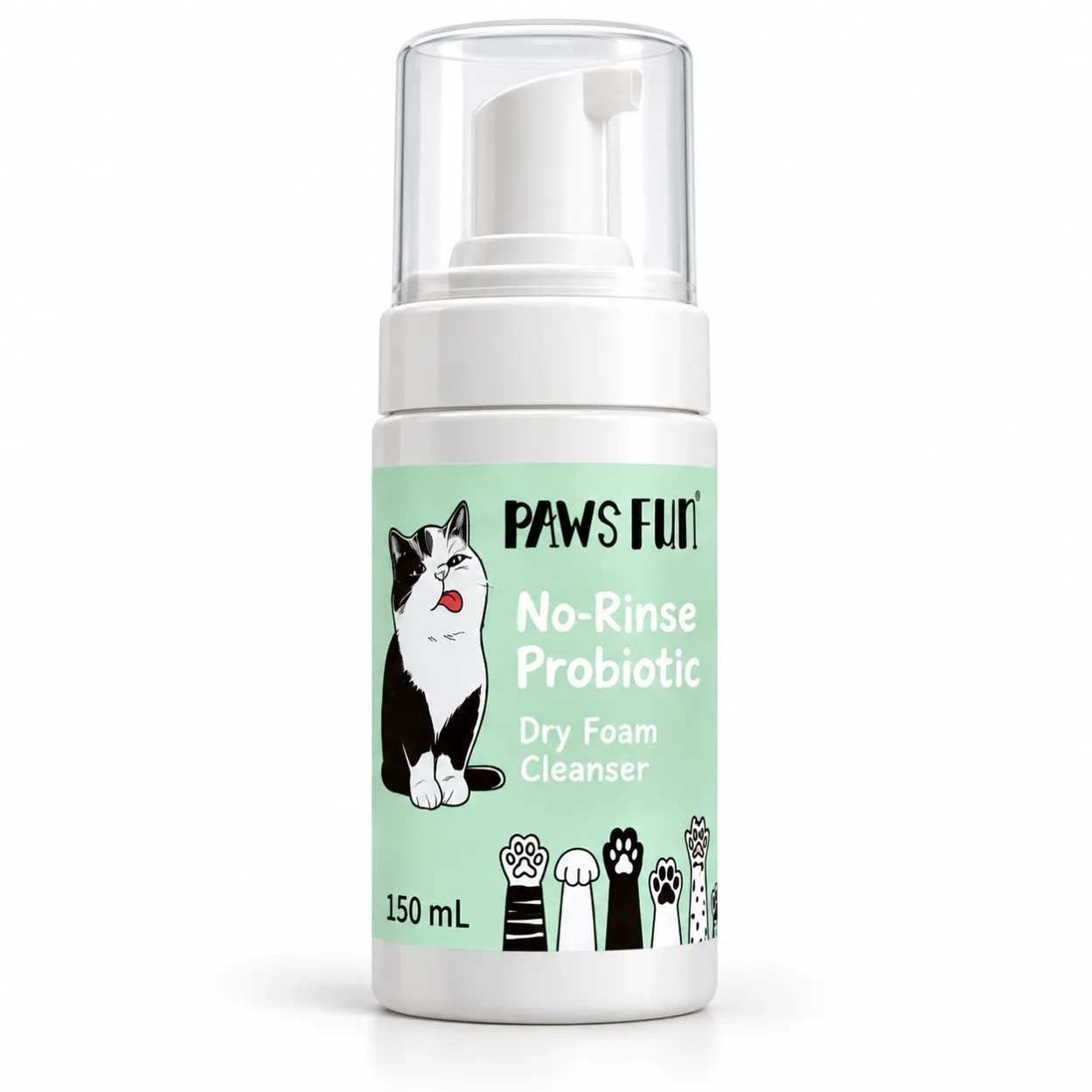
Use PAWS FUN No-Rinse Probiotic Dry Foam Cleanser 150ml as the actual pack reference. The published cat-series enquiry minimum is 500 pieces per SKU; confirm the selected formula and printed pack. The word probiotic in a product name does not demonstrate viable organisms, a measured microbiome change or a disease benefit.
Brief element | Buyer decision | Evidence to request |
|---|---|---|
Intended area | One approved external coat-care routine rather than every body area | Species, area and label-direction review |
Soil challenge | Define the realistic cosmetic cleaning job | A sample comparison matched to that job |
Removal method | Specify approved handling after dispensing | A coherent use instruction, not an improvised rinse assumption |
User and setting | Trained salon staff versus a household owner | Separate handling feedback and instruction comprehension |
Exclusions | Identify situations that require a bath or veterinary assessment instead | Clear boundaries on carton, label and listing |
Resolve the brief before changing the formula
Recommendation: start with the existing sample and one clearly defined task. If the buyer wants more cleansing, ask what failed: the intended soil, application coverage, removal step or customer expectation. Changing fragrance cannot answer a cleaning failure. Increasing dispensing volume without checking the use directions can create a different exposure rather than improve the original sample.
A useful sample scorecard records whether the operator could follow the directions, whether the defined task was completed and what remained unresolved. Keep comments about smell and appearance separate from the cleaning outcome. Use appropriate professional oversight and an approved safety plan for any animal-use evaluation; do not ask retailers to improvise challenges on animals with skin disease.
Turn a salon explanation into a retail instruction
Ask a staff member to explain the product using only the draft label, without adding their own claims. Note whether the customer could confuse a cosmetic cleanser with treatment, direct application to eyes or ears, or a substitute for emergency care. An instruction that depends on a long staff explanation may need a clearer front-panel purpose before artwork approval.
PAWS FUN provides direct own-factory pet-care cosmetics support from R&D coordination through sampling, production checks and export handover. Describe fragrance, texture, capacity and dispenser changes as discussion options until confirmed. Review Home Use and Salon Use separately instead of expecting one pack instruction to serve every channel.
FAQ
Is no-rinse the same as whole-body cleaning?
No. Agree the intended area and routine for the specific product.
Can we extend the use to kittens or irritated skin?
Do not infer a new age or condition claim from the cat-care category. Obtain product-specific review.
What should the first sample request say?
Name the task, use area, user, country, channel and quantity, then identify the aspect of the reference that needs improvement.
Start Your OEM/ODM Project
Start Your OEM/ODM Project — Request the 150 mL cat foam reference with a proposed use-task brief. Include country, channel, first-order quantity per SKU, intended area and customer routine.