When a Cat Stops Jumping: What Vets Check First
Learn how veterinarians assess a cat that stops jumping, distinguish chronic pain from emergencies, and monitor changes in mobility.
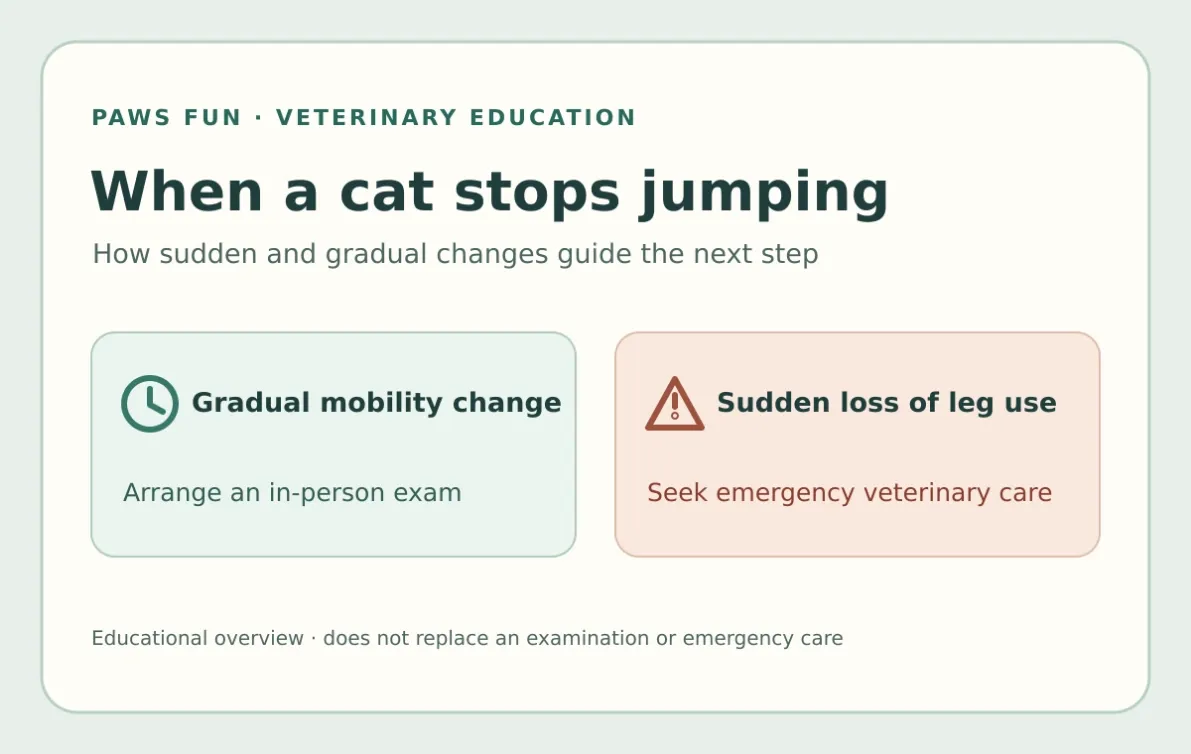
Quick Answer
A cat that gradually stops jumping needs an in-person exam. Joint pain is possible, but a veterinarian first separates problems of the joints, spine or nerves from injury and systemic illness. Sudden inability to use one or both back legs, severe distress, cold hind paws in a suddenly weak cat, or open-mouth breathing warrants emergency veterinary assessment now.
Why the speed of change matters
Arthritis-associated pain can make a cat choose lower surfaces, pause before a jump or change its grooming habits. These changes may develop slowly and may be easier to see in the home than in a clinic. Sudden pain and hindlimb weakness can instead point to trauma, a neurologic problem or loss of blood supply. A clot can lodge near the end of the aorta and interrupt blood flow to the back legs. Cornell’s feline cardiomyopathy resource describes why that presentation is urgent. Do not wait for an online visit or attempt massage or forced movement.
How an exam changes the next step
Finding or question | What the veterinary team may do | Why it changes the plan |
|---|---|---|
Acute weakness, severe pain, cooling paws or difficulty breathing | Prioritize breathing, circulation, pain control and limb perfusion. Use focused tests when the cat is stable enough. | Suspected clot, respiratory distress and unstable trauma need immediate care. A routine arthritis assessment should wait. |
Gradual reluctance to jump or climb | Review gait and home activities, then evaluate the joints, spine and neurologic function. Select imaging if it would help localize a problem or rule out injury or another disorder. | Radiographs can show joint changes; changes on an image alone do not establish the main source or severity of the cat’s pain. |
Choosing chronic pain care | Consider body condition, other conditions, current medicines and whether baseline tests are appropriate before choosing therapy. | The safest plan depends on the individual cat and must include when and how to review benefit and adverse effects. |
Set a baseline the owner and veterinarian can actually repeat
The 2022 AAHA pain guidelines describe assessment, treatment, reassessment and adjustment as an ongoing process. A feline study of owner-reported instruments tested structured mobility measures in cats with degenerative joint disease. Such tools support monitoring, not diagnosis. Choose two familiar actions, such as stepping into the litter tray and reaching a low seat, and observe them naturally rather than making the cat perform painful tasks. Note appetite, grooming and interaction alongside movement, as well as any changes to the home that affect comparison.
Where integrative care fits
After examination, a veterinary team may combine pain management with suitable changes to the home and a planned recheck. A ramp or accessible litter tray may reduce an obstacle, but a change in activity after adding one does not prove that joint inflammation resolved. If considering TCVM or acupuncture, discuss the individual cat’s tolerance, the limited feline evidence for the specific proposed intervention, and what outcome the treating veterinarian would track. Do not use it to delay emergency care or replace the underlying diagnosis.
FAQ
If my cat still jumps for food, can it still have pain?
Yes. A motivated cat may still attempt a task. Compare patterns over time and share them with your veterinarian rather than relying on a single jump.
Can I give a human pain medicine while waiting?
Do not give human pain medicines without direction from a veterinarian. Contact a local clinic for advice; go to an emergency clinic immediately if illness is sudden or severe.
For stable, non-emergency follow-up after a local examination, see PAWS FUN Online Veterinary Consultation. This article is education and cannot diagnose a cat, guarantee a treatment outcome or replace in-person or local emergency care.