Cat Straining With Little or No Urine: Why the First Emergency Tests Matter
Learn why a cat straining with little or no urine needs urgent local care, and how examination, potassium tests and ECG affect veterinary decisions.
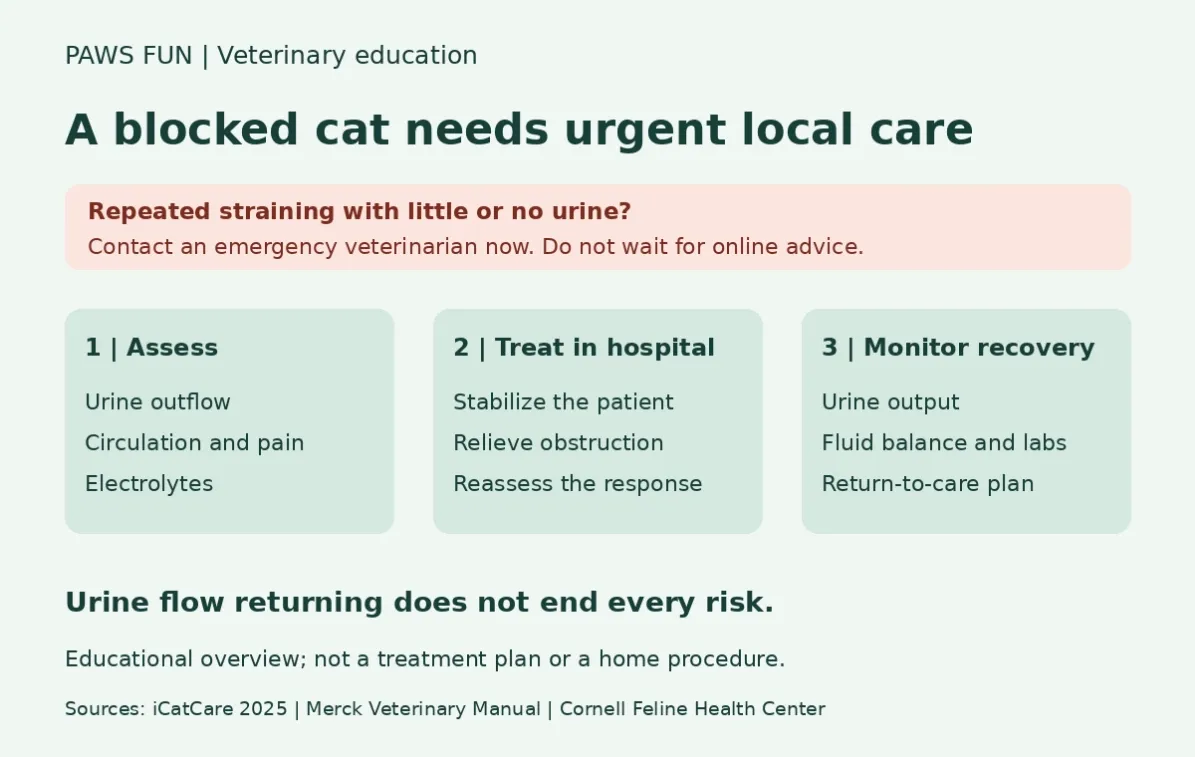
Quick Answer
Repeated trips to the litter box with straining and little or no urine can signal a blocked urethra. Contact a local emergency veterinarian immediately. A few drops, a cat that can still walk, or a suspicion of constipation do not make waiting safe. Do not squeeze the abdomen or try to unblock the cat yourself.
Why the emergency team checks more than the bladder
When urine cannot leave, pressure can interfere with kidney filtration. Potassium can rise, acid–base balance can change, and dehydration or poor circulation can compound the problem. Excess potassium can affect the heart’s electrical conduction. This is why treating the problem as a painful bladder alone can miss an immediate threat.
Stones, plugs and other causes can obstruct urine flow. Non-obstructive cystitis, stones without obstruction and other urinary disease may cause overlapping signs. The 2025 iCatCare consensus guidelines distinguish the immediate question of whether urine can pass from the follow-up question of what caused the signs. Cornell Feline Health Center also identifies suspected obstruction as an emergency.
| Assessment | Question it answers | Why it changes care |
|---|---|---|
| Examination and circulation check | Is there evidence of obstruction, pain or compromised perfusion? | Helps set urgency and guide stabilisation |
| Blood chemistry | Are potassium, kidney values or acid–base status abnormal? | Identifies problems that may need treatment and repeat measurement |
| ECG | Are there electrical changes or rhythm disturbances? | Helps assess cardiac risk; does not replace potassium testing |
| Imaging and urine assessment as indicated | Is there evidence of a stone or another underlying disease? | Can guide treatment choice and follow-up after immediate threats are addressed |
What stabilisation is for
The veterinary team may start pain control, fluid support and treatment for dangerous electrolyte changes while planning relief of the obstruction. The order and urgency depend on stability and whether the cat can safely undergo sedation or anaesthesia. Two cats with similar litter-box signs can therefore receive different initial plans. ECG and potassium findings should be interpreted together: the tracing alone cannot reliably quantify the electrolyte problem.
Restored flow is an important step, but it does not automatically mean kidney values, hydration or urine output are normal. The team may monitor output, repeat blood tests and assess whether the cat can urinate after catheter removal. Once stable, discuss cause-specific recurrence planning and signs that require immediate reassessment.
Traditional Chinese veterinary medicine and follow-up
No TCVM treatment should substitute for urgent assessment, stabilisation or relief of a suspected obstruction. A traditional pattern is not a measurement of potassium or evidence that the urethra is patent. Discuss any non-emergency adjuncts with the treating veterinarian after stabilisation and ask what evidence applies to this cat and diagnosis. No technique, product or cure is recommended here.
FAQ
Could it just be constipation?
Signs can look alike at home. Repeated straining with little or no observed urine is enough to seek emergency assessment now.
Does a normal-looking ECG rule out the problem?
No. It provides information about rhythm and conduction; examination and blood testing answer different questions.
Can I book an online consultation first?
No. For suspicious signs, use a local emergency veterinarian immediately. Online Veterinary Consultation is for non-emergency follow-up education and cannot replace examination.
This is a literature-based educational review, not a case report or a diagnosis. No grooming product is offered for urinary disease.
Separate business enquiries
Start Your OEM/ODM Project — Manufacturing inquiries only. This is not a clinical or emergency contact.