After Canine Cruciate Surgery: What Vets Check When Recovery Stalls
Learn which postoperative changes need urgent care, how vets assess limping and what determines the next rehabilitation milestone.
Quick Answer
After canine cranial cruciate ligament (CCL) surgery, follow the operating team’s instructions. A sudden loss of weight bearing after previous improvement, persistent wound drainage, new swelling or increasing pain warrants a prompt call to the surgical team. If there is collapse, uncontrolled bleeding, or severe distress, seek local emergency veterinary care immediately. Do not progress exercise or try to test knee stability at home while awaiting assessment.
What recovery changes can mean
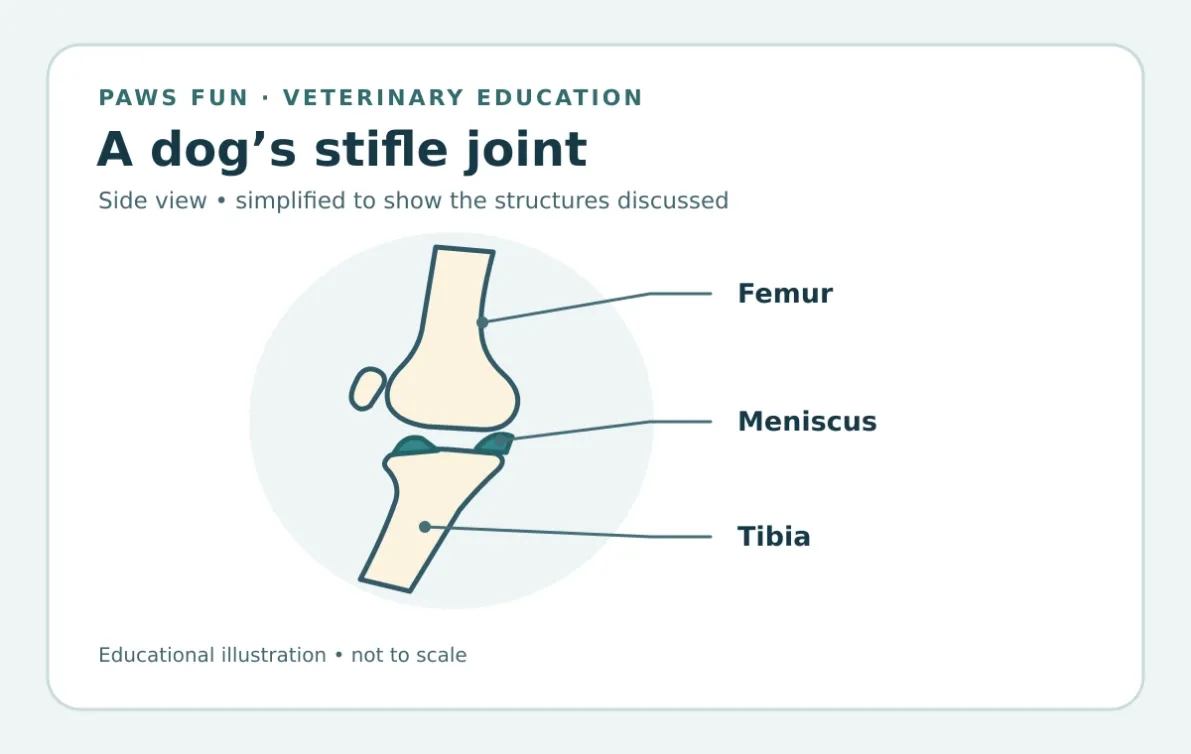
The CCL helps stabilise the canine knee, also called the stifle. When it fails, abnormal joint motion can contribute to pain and cartilage damage. Some operations use a bone cut to change how forces pass through the knee; others support stability by a different mechanism. A dog that looks comfortable on a short walk can still be in the healing period. The surgeon’s restrictions and the planned recheck remain the guide to increasing activity.
Reduced limb use may reflect pain, joint stiffness or muscle loss. A new decline can also prompt assessment for a wound issue, meniscal injury or a problem with a surgical repair, depending on the procedure. The course of symptoms and the examination narrow those possibilities. A video shared with your clinic may illustrate the timing of a limp, but cannot determine its cause.
How the veterinary recheck changes the plan
| What the team checks | Why it matters |
|---|---|
| Incision, swelling and comfort | Helps the team decide whether local healing is progressing or whether a complication needs investigation. |
| Gait, joint motion and muscle use | Assesses functional change and whether the current activity plan is tolerable. |
| Imaging, when indicated | May help assess bone healing or implant position after procedures such as tibial plateau levelling osteotomy (TPLO) and when recovery changes unexpectedly. |
| Progression milestones | Adjusts the next stage to the procedure, findings and response to previous activity. |
Where rehabilitation and integrative care fit
Discuss a clinician-led rehabilitation plan built around comfort and function. The published rehabilitation literature covers several interventions, with variation in study methods and outcome measures. The evidence does not justify copying a schedule from another dog. If considering acupuncture as supportive care, ask the treating team what goal it would address and how they would judge progress. Do not use it to postpone a surgical recheck or to replace a prescribed rehabilitation plan.
For a stable patient with an established local plan, the PAWS FUN non-emergency veterinary and TCVM consultation can discuss records and supportive-care questions. This is educational content and cannot diagnose a setback, prescribe exercise or replace a local examination or emergency service.
FAQ
Does comfortable walking prove the knee has healed?
No. Walking is a functional observation. Ask the surgeon which clinical or imaging milestones are needed before restrictions change.
Can one template cover every surgery?
No. The procedure, tissue healing and clinical findings determine timing. If signs worsen, contact the surgical team before trying a new exercise.
Clinical references: ACVS CCL disease guidance; RCVS Knowledge rehabilitation guidance; 2022 Veterinary Surgery systematic review; WSAVA pain guidelines.