Why a Dog’s Ear Infection Keeps Coming Back
Learn when recurring ear symptoms need urgent care and how veterinary otoscopy, cytology and follow-up guide the next step.
Quick Answer
Recurring head shaking, pain, odour or discharge warrants an in-person veterinary assessment. A new head tilt, loss of balance, inability to stand, sudden facial weakness, or severe pain merits urgent local veterinary contact; call a local emergency clinic if your regular vet cannot assess the dog promptly. Do not put a grooming product, home remedy or leftover ear medicine in the canal while waiting for an examination.
Why the same symptoms can have different causes
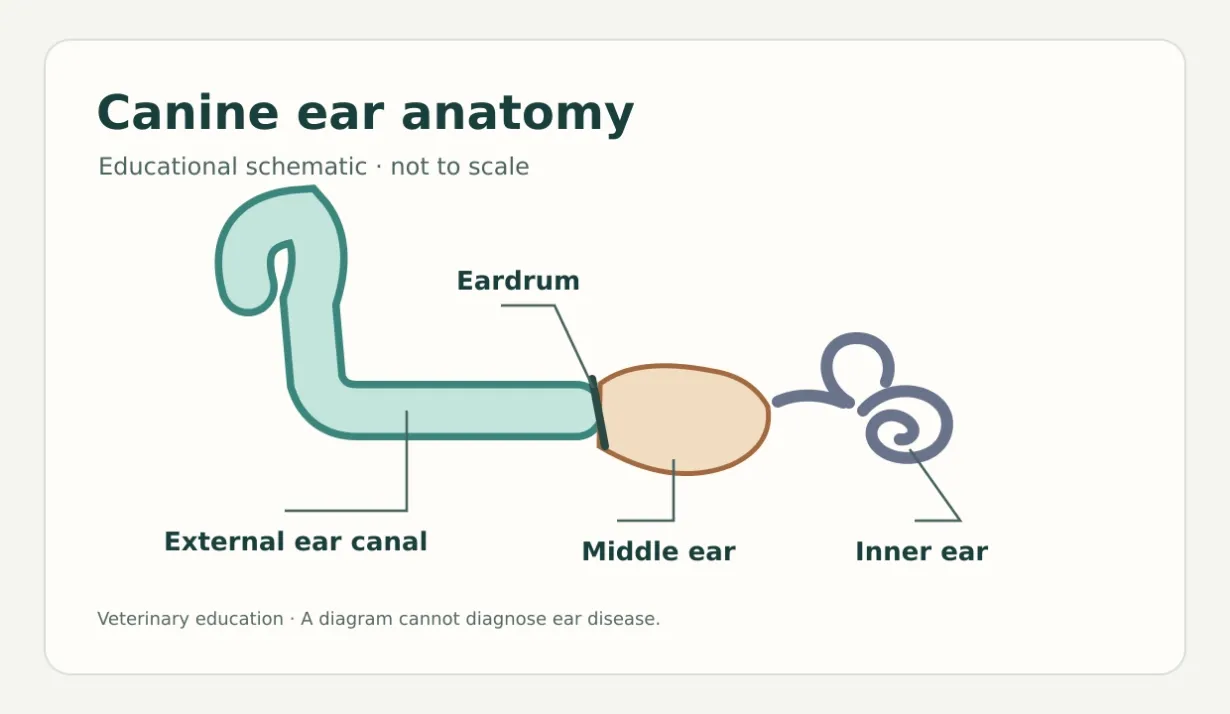
Otitis externa means inflammation of the outer ear canal. A foreign body, parasites or an underlying skin condition such as allergic disease can start inflammation. Yeast or bacteria may then increase in an inflamed canal. Over time, swelling and tissue changes can narrow the canal, trapping debris and making a recurrence harder to evaluate. A bad smell or dark material cannot identify the cause on its own. A sudden, painful problem in one ear after outdoor activity makes a foreign body worth considering; repeated ear signs alongside itchy feet or skin raise a different set of questions. Neither pattern makes the diagnosis.
How tests change the veterinary decision
| Check | What it can clarify | What it cannot answer alone |
|---|---|---|
| Otoscopy | Canal swelling, visible debris or a foreign object; whether the eardrum can be seen and appears intact. | Pain, swelling or debris may prevent a reliable view; an unseen eardrum cannot be assumed intact. |
| Cytology | A microscopic exam of material from the affected ear helps distinguish yeast, bacterial shapes and inflammatory cells. | It does not establish the underlying cause or fully assess the middle ear. |
| Additional testing or referral | Persistent disease, concerning microscopy or neurological signs may lead to culture, a deeper exam or imaging. | Not every first episode needs all these tests; the examination guides the choice. |
What the clinic monitors before calling it resolved
The veterinarian addresses pain, evaluates whether the canal and eardrum can be examined safely, and selects treatment based on the findings. A painful or obstructed canal may require a planned examination under sedation. At follow-up, a quieter dog or less odour is encouraging, but the clinician may also repeat otoscopy or cytology to assess what remains. Repeated episodes call for reviewing the primary trigger and how the ear responded over time. Middle- or inner-ear disease may require imaging or referral and can affect hearing, balance or facial movement.
Where integrative follow-up fits
For a stable dog already evaluated locally, PAWS FUN’s non-emergency veterinary and TCVM consultation can discuss the case history and supportive-care questions alongside the local plan. The sources used here do not establish that TCVM resolves an active ear infection. This educational article does not diagnose, prescribe or replace an examination or local emergency care.
FAQ
Can I restart last time’s ear medicine?
Ask the examining veterinarian first. The cause, organisms and condition of the eardrum can differ from the previous episode.
Can a salon clean the ear before the visit?
Leave a painful or draining canal for the veterinarian to examine. A groomer can describe what they noticed and recommend referral; they should not try to flush the ear.
Clinical sources
- AAHA allergic skin disease guidelines (2023)
- Merck Veterinary Manual: Otitis Externa in Animals
- Merck Veterinary Manual: Otitis Media and Interna in Animals
Start Your OEM/ODM Project
Business enquiries only: private-label grooming projects and branded distribution. For a pet’s ear symptoms, contact a local veterinary team.
Start Your OEM/ODM Project · pawsfuntd@gmail.com · WhatsApp +86 185 8884 5736