Online TCVM: What to Record When Your Cat Drops Food
Record what happens when your cat drops food, changes chewing or eats less. Prepare a useful history for a veterinary visit or online TCVM discussion.
Quick Answer
If your cat starts dropping food, chewing differently or eating less, contact your local veterinary team and note what changed at a normal meal. A quiet observation and an accurate timeline are useful. The way a cat chews does not identify the cause, and a remote discussion cannot replace an examination.
Record the change during a normal meal
Write down what your cat normally eats, when you first noticed the change and whether food fell out, was left in the bowl, or was swallowed differently. Record actual intake as best you can and whether you have noticed drooling, new odor or a change in behavior. If a short video can be taken without distress, film the normal meal from a distance. Do not force the mouth open or repeatedly offer food just to capture a sign.
Cornell’s Feline Health Center overview of dental disease describes changes in chewing and eating among possible signs of oral problems. Its tooth resorption guide also discusses food dropping as an observation a caregiver might notice. Those examples explain why the history is useful. They are not a checklist for diagnosing dental disease at home.
Prepare a short record to share with a veterinarian
| Record | Useful detail |
|---|---|
| Timeline | First occurrence, whether it repeats and what your cat normally does. |
| Food and intake | Texture normally eaten, amount offered, amount left and any recent change. |
| Other observations | Drooling or behavior changes observed without handling; note when they happened. |
| Product history | Photos of any recently used oral-care labels, how the products were used and dates. |
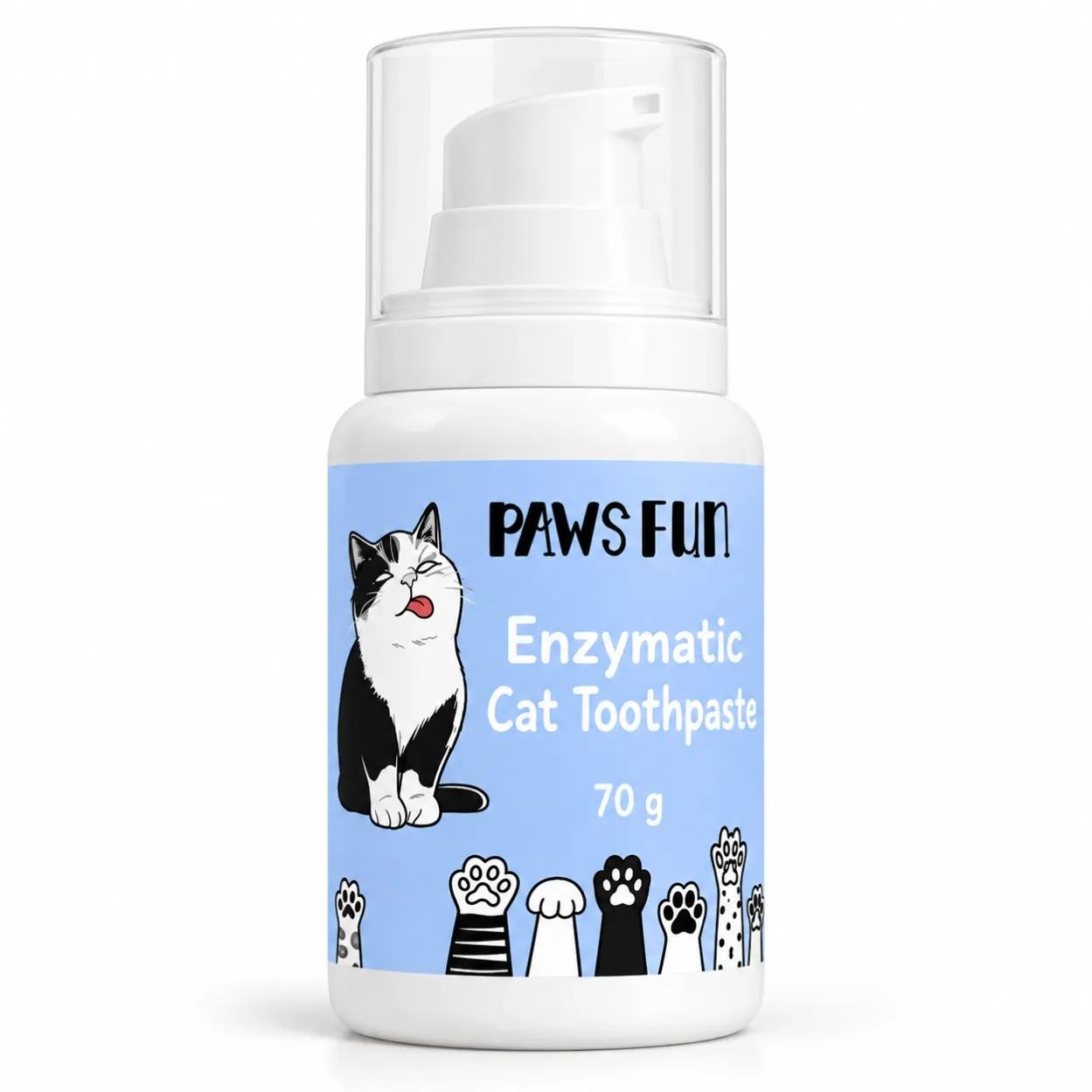
If you used the PAWS FUN Enzymatic Pet Toothpaste 70g, the product page can help identify the packaging for the history. This is a reference for what was used, not a suggestion to start brushing or use toothpaste for a new symptom.
When to use local care first
Do not delay speaking to a local veterinarian if your cat is eating less, stops eating or appears unwell. Use local emergency veterinary care immediately for breathing difficulty or an urgent deterioration. See Cornell’s emergency-care guidance. The PAWS FUN online veterinary and TCVM consultation entry can help you organize observations and questions. This article is educational only; it does not diagnose, recommend treatment or replace an in-person visit or emergency care.
FAQ
Can a video establish which tooth is affected?
No. The video shows the behavior. An in-person veterinary evaluation is needed to investigate the cause.
Should I try a different oral-care product first?
Avoid adding new products to troubleshoot a symptom. Share current and recent product history with your veterinarian.
What if my cat still eats some food?
Record how much and whether the pattern is new. Ask your local veterinary team what timing is appropriate.
Start Your OEM/ODM Project
PAWS FUN is a pet-care cosmetics brand and direct manufacturer with its own factory. We coordinate formulation and sampling, production, quality control and export. Start Your OEM/ODM Project · pawsfuntd@gmail.com · WhatsApp +86 185 8884 5736. For branded supply, Become Our Distributor.