Pet Shampoo Manufacturer: Agree Overruns Before the PO
Separate finished units, bulk quantity and leftover printed packaging before agreeing a private-label pet shampoo purchase order.
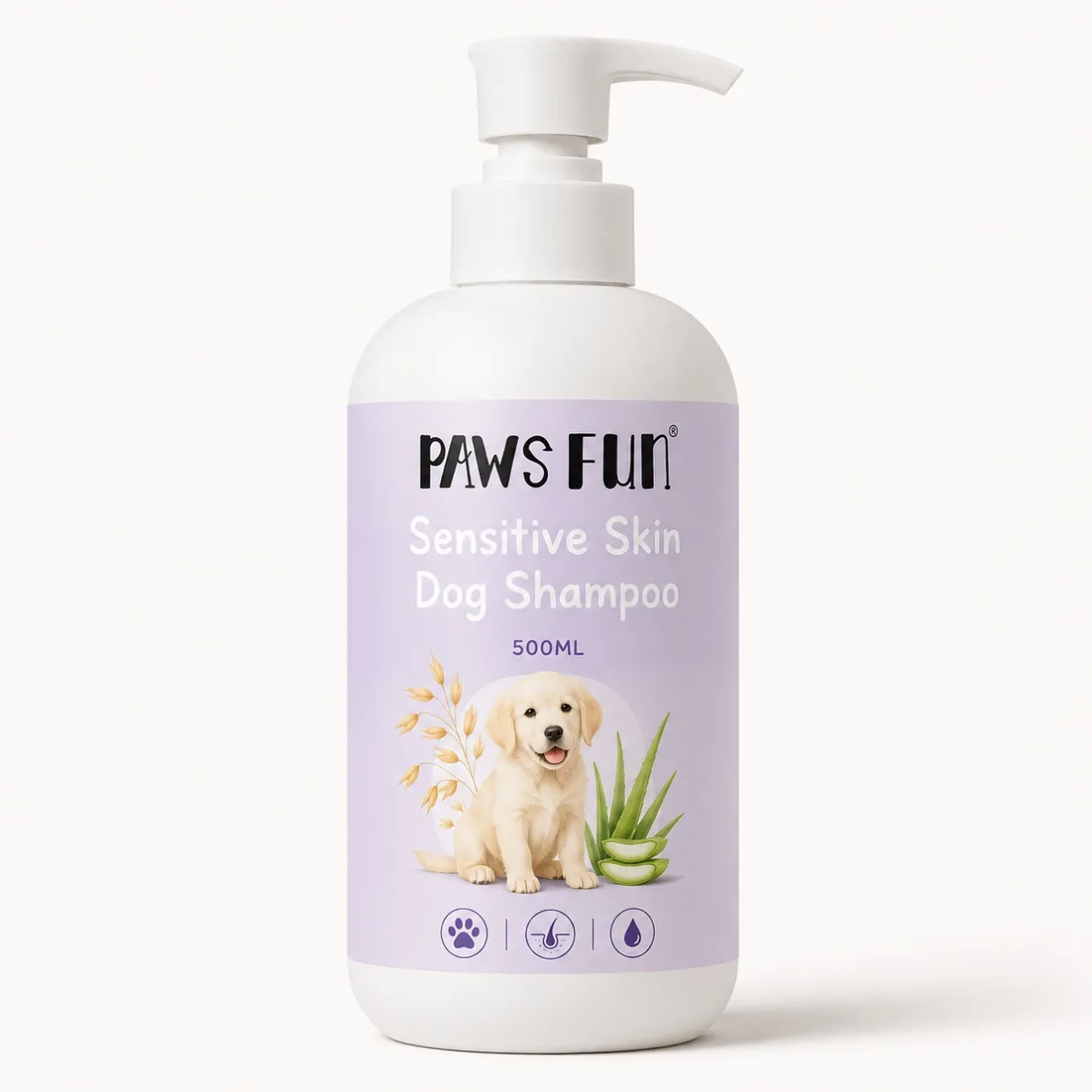
The PAWS FUN catalogue, checked 19 November 2026, includes a 500 mL dog shampoo and a separate 32:1 gallon salon reference. Their presence creates a manufacturing purchase question, not evidence of a new launch: how should the buyer handle finished-unit shortfalls, overruns and unused packaging when planning an order?
Quick Answer
Agree the quantity basis before the purchase order: ordered saleable units, any permitted delivery range, how deviations are approved, and who owns leftover printed components. Keep formula minimums, packaging minimums and delivered finished units separate. No standard overrun percentage is assumed here.
Start Your OEM/ODM Project — Request a 500 mL dog shampoo quotation with a written quantity and component-balance proposal. Send sales country, channel and first-order units per SKU.
Do not let one minimum hide three commitments
Use Sensitive Skin Dog Shampoo 500ml for the retail enquiry and Highly Concentrated Dog Shampoo 32:1 - 1 Gallon for a separate salon enquiry. Do not assume these are one formula filled into different containers or that their quantities can be pooled. The approved formula, process and packaging determine what can be combined.
Quantity line | What to agree | Why the buyer needs it |
|---|---|---|
Finished units | Order quantity, any agreed delivery range and authorization for a deviation | Prevents an unexpected invoice or shortage |
Bulk formula | Batch requirement, expected conversion and approved handling of remainder | Avoids treating theoretical fill as saleable output |
Printed labels and cartons | Purchased amount, usable balance and ownership | Makes future component commitments visible |
Rejected or damaged material | How non-saleable units are counted and investigated | Keeps rejects out of the delivered-unit denominator |
Residual components | Storage terms, revision status and next-order decision | Avoids reusing obsolete artwork merely to consume stock |
Use a component balance without inventing yield
Recommended reconciliation: opening usable components + accepted receipts − components consumed − documented rejects = closing usable components. The balance should identify the component and artwork revision. A count of printed labels is not proof of finished bottle output: filling, inspection and packing can each produce a different quantity record.
Ask the factory which yield assumptions can be supported from the selected process, and what happens if actual output changes. Do not promise a customer an exact carton split using theoretical bulk volume alone. If two delivery destinations are proposed, specify saleable units and carton allocation for each, with the remainder handled through an agreed instruction.
Make the reorder decision before the balance becomes a problem
A leftover closure or label may be useful only if the next order keeps the relevant specification. Record whether components can be reused, revised or disposed of through the normal approved process, and who approves any cost. A packaging balance should not force a formula change or a relabelled duplicate SKU. Avoid assuming that a low finished-unit enquiry eliminates a larger printing commitment.
PAWS FUN owns its pet-care cosmetics factory and coordinates R&D, sampling, production, quality control and export cooperation. Ask for a configuration-specific MOQ, quote validity and quantity policy. This is a purchase-planning framework, not a binding factory offer. The OEM/ODM page and FAQ support your first enquiry; the confirmed order should state the actual commercial agreement.
FAQ
Are overruns always normal or free?
No universal policy is asserted. Agree quantities, pricing and authorization before ordering.
Can leftover labels count toward my next order?
Only if ownership, condition, revision and storage arrangements allow it. Ask for the actual balance.
Does a gallon format share the 500 mL formula?
Do not assume this. Quote and approve each product specification separately.
Start Your OEM/ODM Project
Start Your OEM/ODM Project — Request a 500 mL dog shampoo quotation with a written quantity and component-balance proposal. Send sales country, channel and first-order units per SKU.