Private Label Pet Spray Fragrance Brief: Distinguish Fragrance-Free from a Low-Scent Target
Prepare a private label pet spray fragrance brief with clear scent objectives, formula review, packaging checks and evidence-based wording before sampling.
Quick Answer
For a private label pet spray, fragrance-free and low scent are different project objectives. Start by describing the intended use and scent preference, then ask the technical team to review the proposed formulation and wording. A product that smells faint does not automatically qualify for a fragrance-free claim, and either description does not establish allergy prevention or universal safety.
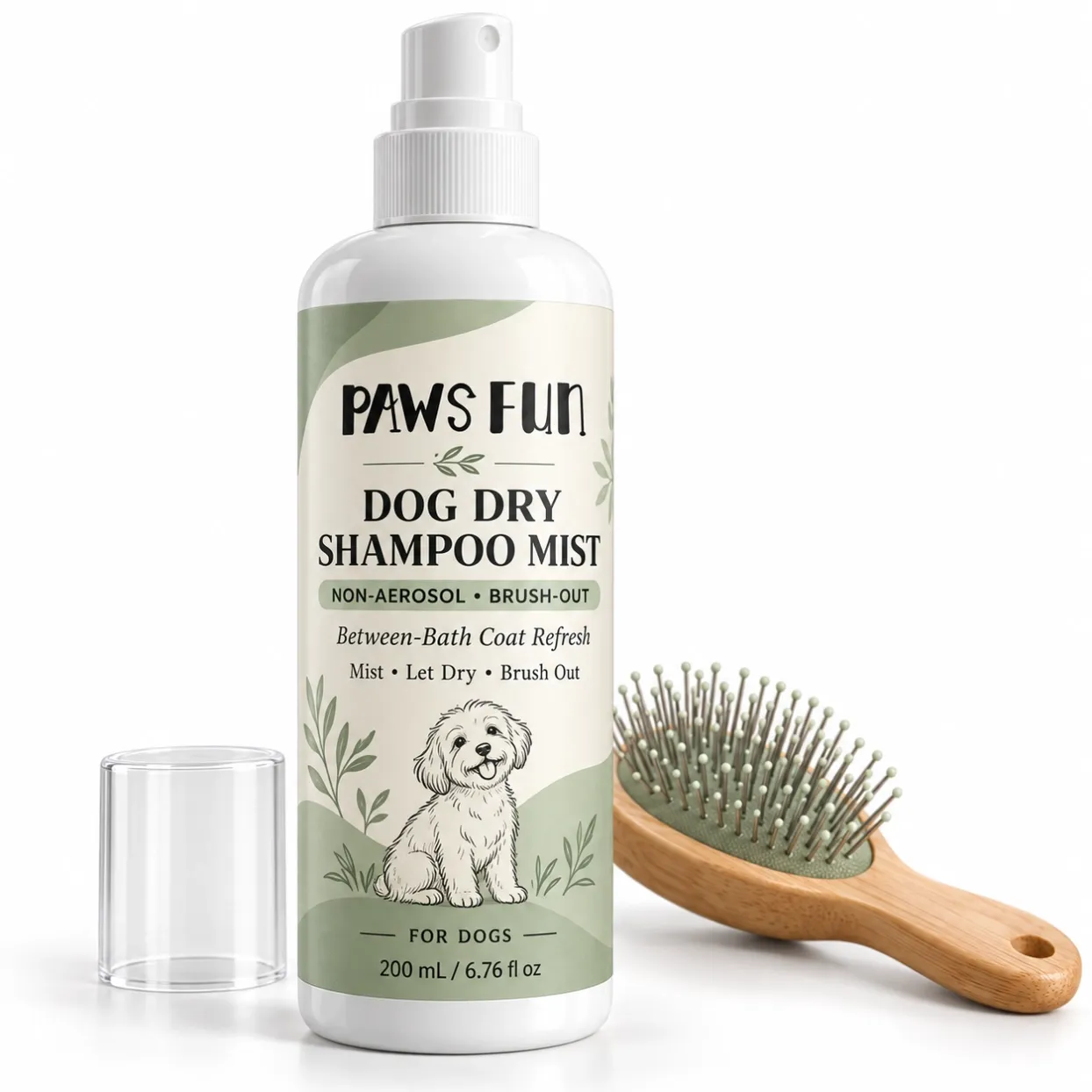
The existing PAWS FUN Non-Aerosol Brush-Out Dog Dry Shampoo Mist 200ml and Pet Odor Neutralizing Spray 250ml are real product references. This article does not declare either current SKU fragrance-free or change its confirmed formula.
Describe the commercial reason for the scent choice
A salon may want a finish that does not compete with other products in the service. A retail brand may prefer a signature scent or a restrained sensory experience. An importer may need one consistent proposal across several channels. State that commercial objective rather than requesting a vague sensitive version.
Identify the target species and actual application routine. The factory needs to know whether the product is intended for a between-bath step, a brushing routine or a finishing step. Do not choose a fragrance solely because it is popular in human perfume or assume an essential oil is automatically suitable for animals.
Separate the decisions in the sample request
| Decision | What to specify |
|---|---|
| Formula role | The approved grooming purpose and intended use conditions. |
| Fragrance objective | No intentional fragrance route, a restrained scent target or a signature scent proposal, subject to review. |
| Wording | The exact proposed claim and the information needed to support it. |
| Sample comparison | Which one variable differs between reference and proposed sample. |
| Pack | Actual container, spray assembly and component versions. |
| Approval | Who reviews technical suitability, scent preference and destination-market copy. |
Keep commercial preference separate from technical suitability. A buyer can prefer one aroma without being qualified to approve ingredient suitability. The technical team should determine the relevant ingredient review, compatibility work and other assessments needed for the actual project.
Do not equate fragrance-free with odorless
The base formulation and packaging can affect perceived smell. Explain the target precisely and evaluate the actual sample rather than approving a name alone. Ask the destination reviewer how the proposed wording should be supported. Do not disguise a scent-changing ingredient as a non-fragrance component without an appropriate review.
Compare samples under a defined routine
Use a reference and one proposed alternative with identified formula codes. Keep the intended application, packaging and evaluation conditions comparable. Record the smell at the relevant stages of the routine and after the agreed interval. An undocumented sniff of a bulk jar provides limited information about a finished spray.
If changes beyond fragrance are necessary, list them. The comparison should not claim that fragrance alone caused a different finish when the base formula, spray head and applied amount also changed. Keep the question answerable before requesting several more prototypes.
Include stability and packaging in the decision
A fragrance change may require review of appearance, formula compatibility, component interaction and dispensing. Confirm the relevant sampling and technical scope with the factory. Do not assume that results for the existing fragrance apply automatically to a different formula version.
Ask whether the new route affects ingredient documentation, artwork, procurement quantities or production planning. MOQ and timing depend on the actual formula and packaging proposal; a small fragrance adjustment is not necessarily a small commercial change.
Approve sensory copy and product copy together
Use measured language that describes the confirmed grooming role. Avoid turning no added fragrance, gentle scent or a natural ingredient story into a promise about itching, allergy, disease or every animal's tolerance. A claim should reflect the actual product and its supporting review.
Explore Products and FAQ, then send the chosen reference, market, channel, quantity and scent objective. PAWS FUN can coordinate the proposal with its own factory without publishing unconfirmed formula details.
FAQ
Is low scent the same as fragrance-free?
No. Define the objective and have the formulation and proposed wording reviewed separately.
Can the approved 200ml mist be called fragrance-free now?
No new claim is made here. Use its confirmed product information until an authorized formula and wording review supports a change.
Does a fragrance-free direction guarantee suitability for sensitive animals?
No. Suitability requires assessment of the actual product and intended use; unexplained symptoms require veterinary care.
Start Your OEM/ODM Project
PAWS FUN is a pet care cosmetics brand and direct manufacturer with its own factory. We coordinate R&D, sampling, production, quality control and export cooperation for shampoos, conditioners, sprays, foams, creams, balms and professional salon formats. Formula options, MOQ, tests and lead time are confirmed for each project.
Start Your OEM/ODM Project: send your destination market, sales channel, product reference, quantity range and packaging preference. Email pawsfuntd@gmail.com or WhatsApp +86 185 8884 5736.
For our existing branded range, Become Our Distributor. Learn about OEM/ODM and About PAWS FUN. Grooming tools are accessories for qualified cosmetics projects; we do not accept independent tool OEM projects.