Recurring Dog Skin Infections: What Vets Check Next
Learn why recurrent canine skin infections need a new exam and how cytology, bacterial culture and follow-up help guide veterinary decisions.
Quick Answer
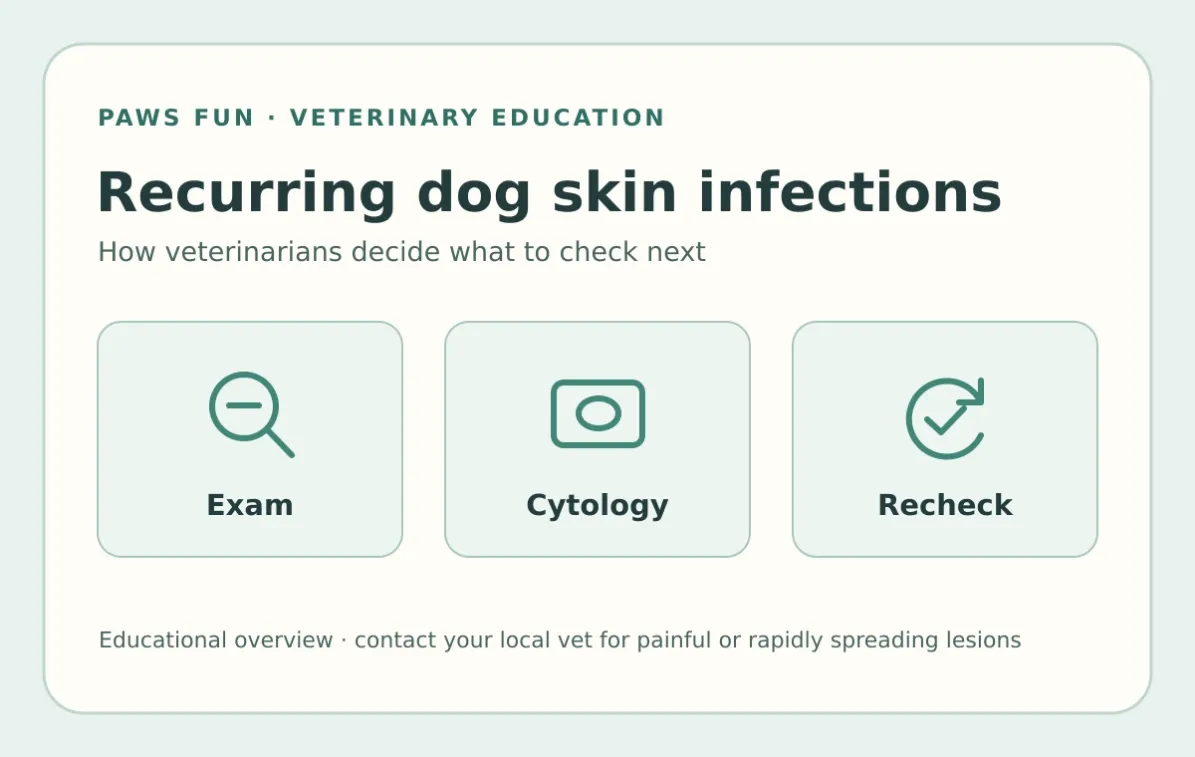
Recurring itching, pustules or crusts after treatment merit a fresh veterinary exam and often repeat skin cytology. Cytology can show whether bacteria or yeast are contributing today. A lasting plan also looks for factors that keep the skin inflamed, such as allergy or parasites, and looks for evidence that infection extends into deeper tissue.
When a dog should be seen urgently
Seek prompt local veterinary care for painful swelling, draining lesions, rapid spread, fever or marked lethargy. If your dog collapses, has trouble breathing or rapidly deteriorates, contact an emergency veterinary service now. Do not delay in-person care for a grooming appointment, a remote consultation or complementary treatment.
Why the same-looking flare can lead to a different decision
Surface and superficial infection affect the outer skin or hair follicles. Infection or inflammation extending into deeper tissue can present with pain, lumps and draining tracts. Broken skin and disruption of the skin barrier can accompany self-trauma or underlying disease. Red skin may also reflect allergy, parasites, yeast overgrowth or another condition, and more than one process can be present together. An earlier response to treatment does not establish the cause of the new episode.
What the veterinarian examines | Clinical question | How it changes the plan |
|---|---|---|
Distribution, lesion type and current medicines | Are lesions superficial, deep or atypical? Is the same pattern recurring? | Directs sampling and tells the clinician when pain, systemic signs or deep disease need priority. |
Cytology of a representative lesion | What cells, bacteria or yeast are present at the site? | Helps distinguish secondary infection or overgrowth from inflammation alone. Cytology identifies what is seen on the slide; culture answers different questions. |
Culture and susceptibility when indicated | Which bacterium is involved, and which treatments may work in this context? | Especially relevant with deep disease, inadequate response or a resistance concern. The clinician interprets results with the exam and cytology. |
Parasite assessment and review after infection control | Does itching persist after infection has improved, and what else could explain it? | May lead to evaluation for external parasites, a structured diet trial or an allergy assessment. |
How treatment and rechecks fit together
The 2025 ISCAID canine pyoderma guideline synopsis emphasizes cytology and distinguishes treatment by depth and clinical context. Veterinary topical treatment can be appropriate for superficial disease. Deep infection may need systemic treatment chosen using clinical and microbiological information. Repeat examination, and cytology when appropriate, tell the veterinary team whether infection has resolved and whether persistent itch needs a different workup. The AAHA allergic skin disease guidelines explain how to approach the underlying itch.
Where integrative care fits
Discuss complementary care with the vet after examination and stabilization, with clear goals such as comfort and follow-up, and review all topical and oral products for possible interactions or irritation. These guidelines do not establish TCVM as a substitute for infection-directed care. The evidence limits matter: a theory of itch or inflammation cannot identify bacteria or establish antimicrobial susceptibility. This article is a literature-based educational overview and does not diagnose an individual dog or replace in-person or emergency care.
FAQ
Why repeat cytology if it was positive last time?
Today’s lesions may involve a different mix of inflammation, bacteria or yeast. A fresh sample helps the clinician avoid treating the previous result instead of the current problem.
Can I reuse leftover medication or my usual shampoo?
Ask your treating vet first, especially if the area is painful, raw or draining. Products for routine grooming are separate from veterinary treatment. Tell the clinic what you applied and when.