TCVM Acupuncture for Canine Osteoarthritis: What Counts as Improvement?
Learn when vets may discuss acupuncture for canine osteoarthritis, what canine studies show, and how a mobility recheck guides next steps.
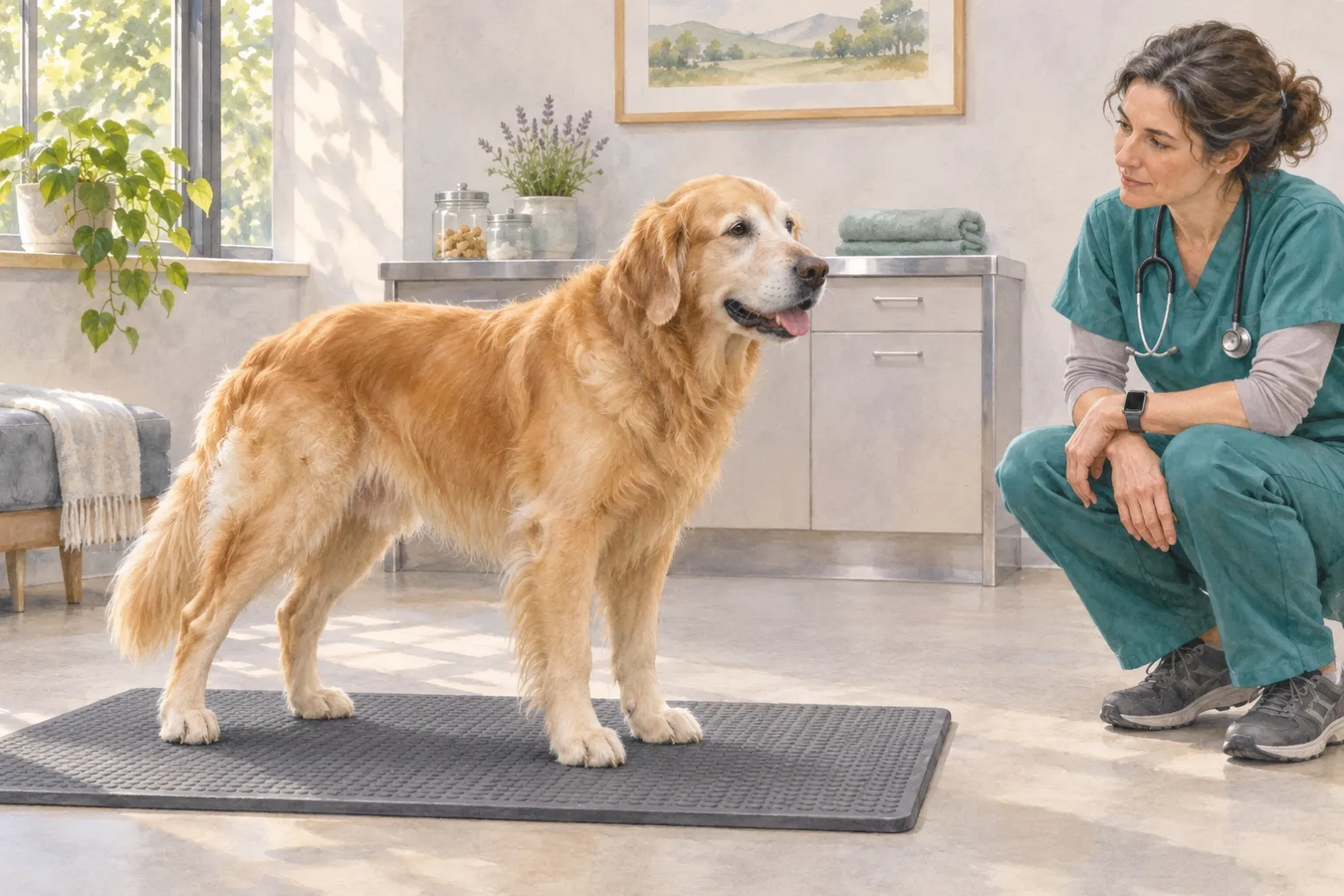
Cover: educational illustration.
Quick Answer
For a dog with confirmed osteoarthritis and a stable care plan, a veterinarian may discuss acupuncture as a possible adjunct and agree in advance how to judge whether it helps. Direct canine evidence is limited and mixed. Do not delay diagnosis or stop pain management to test it. A sudden inability to stand or walk, suspected major trauma or severe sudden pain warrants urgent local veterinary care.
First decide whether this is still the same mobility problem
Osteoarthritis can affect a joint’s cartilage and other tissues and change how a dog loads the limb. Stiffness after rest, trouble rising and reluctance on stairs can follow, but similar signs can come from another problem. When a previously stable dog abruptly changes its gait, the veterinarian may look for a paw injury, a ligament problem or a source of neurological weakness before modifying the chronic pain plan. The pattern on an orthopedic and neurological exam helps choose whether imaging or referral would change the decision. Radiographs can support assessment of joint changes, but the images alone do not establish how much pain a dog is experiencing.
If the dog suddenly cannot stand or walk, is dragging limbs, or has major trauma or severe distress, contact an emergency veterinary hospital. VCA urgent-care guidance distinguishes walking pets that can be assessed for a limp from serious emergencies. Do not wait for an acupuncture appointment or online reply.
Where the TCVM assessment fits
A veterinarian trained in Traditional Chinese Veterinary Medicine may organize findings using a traditional pattern framework. That language reflects a traditional interpretation. It cannot distinguish degenerative joint disease from a torn ligament, localize a spinal lesion or measure response to care. In an integrative visit, the conventional exam determines what requires diagnosis or escalation. The TCVM assessment informs discussion of a possible adjunct for a stable patient, with explicit expectations and monitoring.
What the evidence does and does not show
A 2020 randomized, blinded crossover study by Baker-Meuten and colleagues in naturally affected dogs reported an improvement on one caregiver-rated individual activity measure compared with placebo. It did not identify differences in objective limb loading or activity counts, or in orthopedic scores, across the relevant comparisons. Some owner outcomes did not separate from placebo. The findings allow a discussion about what to monitor; they do not establish predictable pain relief, restored mobility or a substitute for the existing plan. The 2022 AAHA pain guidelines emphasize repeated assessment and multimodal pain care. Clinicians still need to consider veterinary analgesia, weight management and suitable rehabilitation for that dog.
Set a recheck decision before the first session
Pick two or three ordinary tasks the dog already does, such as rising from the same bed or making a turn on a short familiar walk. Ask your veterinarian whether a validated questionnaire such as the Canine Brief Pain Inventory is appropriate. Track the same activities under similar conditions and log medication changes or unusual activity that could account for improvement or worsening. Avoid provoking pain for a recording. At reassessment, weigh the repeated observations, the veterinary exam, any distress associated with visits and the ongoing care burden together. If there is no meaningful improvement or if function worsens, review the diagnosis and core plan rather than assuming more sessions will help.
FAQ
Can owners judge the result from one better walk?
A better walk is a useful observation. Changes in surface, motivation, fatigue and medication timing also influence it. Compare repeated observations and share them at the veterinary recheck.
Can I stop prescribed medication if the dog seems more comfortable?
Discuss any change with the prescribing veterinarian. It is difficult to interpret improvement when several interventions change together, and pain may return after a medication change.
Can the online service diagnose arthritis or decide whether my dog needs urgent care?
No. This article is educational, and remote guidance cannot replace a physical examination or emergency care. For a stable case with a local veterinary diagnosis and treatment plan, check the PAWS FUN online veterinary guidance process to ask whether a nonurgent discussion is suitable.