TCVM for a Cat With Chronic Joint Pain: How to Judge an Acupuncture Trial
Learn when a veterinarian may consider acupuncture for feline joint pain, how an exam changes the decision and how to monitor comfort and function.
Quick Answer
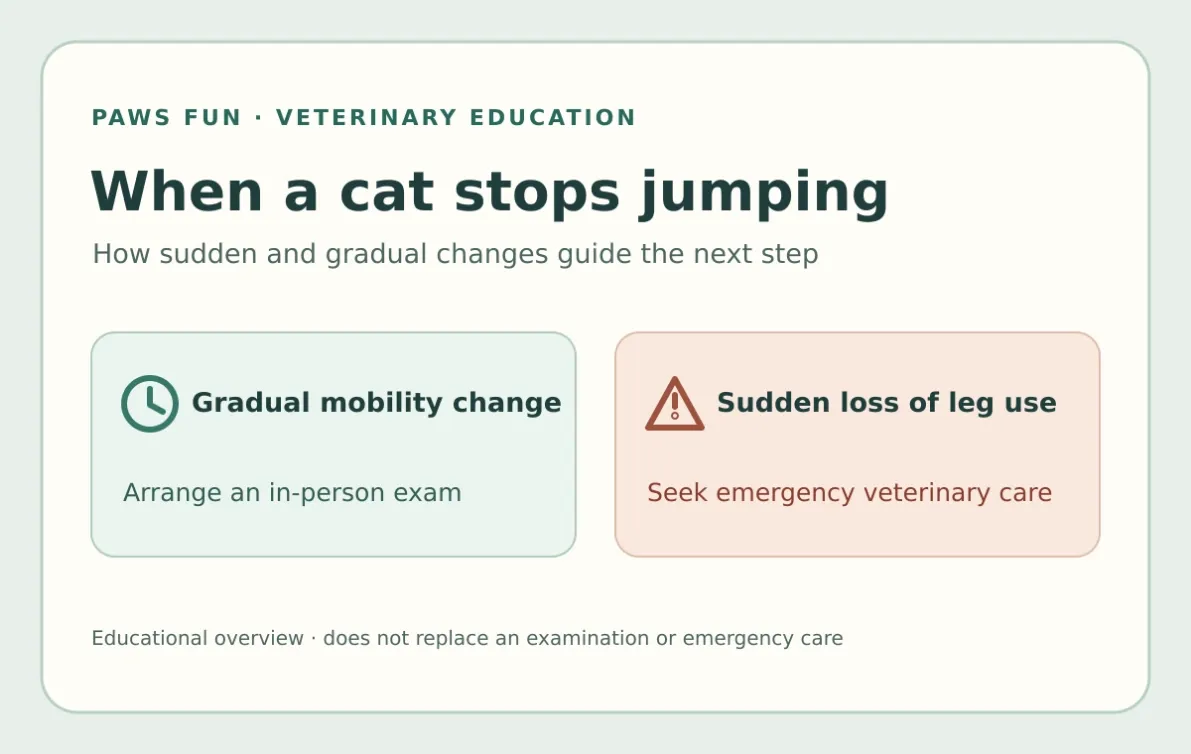
If an older cat has slowly stopped jumping, ask a local veterinarian to assess the cause and start an appropriate pain and mobility plan. TCVM acupuncture can be discussed as a supervised adjunct for a stable, diagnosed cat. Before starting, agree what everyday activity should improve and what would make you stop. Feline guidelines describe acupuncture as one possible part of multimodal care; direct evidence for consistent benefit in feline osteoarthritis remains limited.
First decide whether this is an emergency
A cat that suddenly cannot use one or both back legs, cries out in severe pain, or has trouble breathing needs immediate local emergency veterinary care. A blood clot or another acute problem can look very different from ordinary stiffness, and sudden weakness should not be treated as an arthritis flare at home. Seek emergency care before any online review or complementary treatment.
The exam changes what a TCVM trial is trying to improve
Joint pain can make a cat hesitate before jumping or change how it gets into the litter tray. Neurologic weakness, injury and other illness can also change movement. Reduced self-grooming alone cannot identify the cause. In clinic, the veterinarian may assess gait, joints, neurologic signs and overall health, then decide whether imaging or blood and urine testing would change the plan. Imaging can support a joint diagnosis; the cat’s function and exam guide pain management rather than treating an image alone. Concurrent disease and medicines matter when choosing conventional pain relief and monitoring.
What a TCVM assessment can add
A TCVM practitioner may use posture, movement and comfort on handling to describe a traditional clinical pattern. This is a framework for discussing adjunct care; it does not identify the medical cause of weakness or replace the local veterinarian’s diagnosis. A useful consultation records how the cat copes with transport and handling and which activity matters most to it. A fearful cat that tolerates neither the journey nor the session may be better served by home accessibility changes and clinician-directed care without adding another visit.
Agree in advance what counts as improvement
Choose two or three activities the cat performs voluntarily: reaching a preferred low surface, getting into the same litter tray, or walking to the food area. Record the same activities before the trial and at the veterinarian’s agreed review point. Where useful, ask about the Feline Musculoskeletal Pain Index, a validated caregiver questionnaire; it helps track change without diagnosing the cause. Note simultaneous changes in pain medicine, home setup and daily activity. If several changes happened together, an improvement cannot be attributed to acupuncture alone.
| At the recheck | What to review with the vet |
|---|---|
| Improvement in a chosen activity without extra stress | Repeat the observation under comparable conditions; consider whether to continue |
| No meaningful improvement, fear, or increased handling stress | Review whether to stop or change the plan |
| New weakness, substantial pain, or rapid decline | Contact a local veterinarian promptly; sudden limb loss or breathing trouble is an emergency |
FAQ
Can an acupuncture trial replace pain medication?
Medication changes belong with the treating veterinarian. The adjunct trial has a function goal and an agreed stop rule; it should not delay established pain management.
Does a positive canine or postoperative study establish benefit in my cat?
No. Species and condition matter. A dog arthritis trial or a study of postoperative pain in cats does not prove benefit in feline chronic joint disease.
Can an online consultation diagnose arthritis or advise treatment in an emergency?
No. PAWS FUN’s online TCVM guidance is for suitable, non-urgent discussions. It cannot diagnose an individual cat online, replace an in-person examination or provide emergency care.
Non-urgent guidance
Explore online TCVM guidance for eligible non-urgent discussions, alongside your local veterinarian. This educational article gives general information and is not a diagnosis or treatment plan. For urgent signs, contact a local emergency veterinary clinic.