TCVM for Dogs With Arthritis: How to Decide Whether Acupuncture Is Helping
Considering veterinary acupuncture for canine arthritis? Learn how TCVM assessment fits with diagnosis, what trials found, and how to track daily function.
Quick Answer
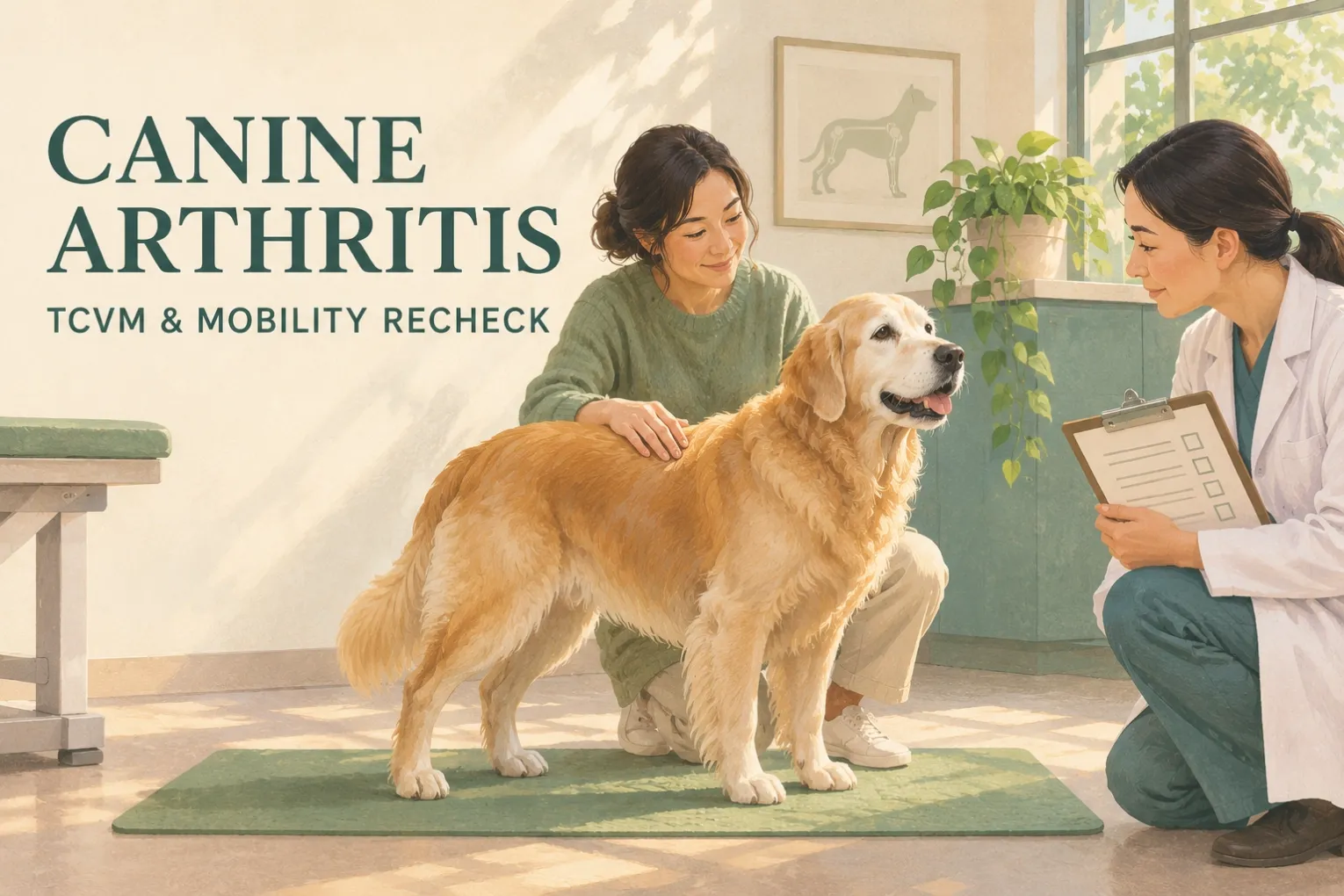
Cover: educational illustration.
In Traditional Chinese Veterinary Medicine (TCVM), acupuncture may be discussed as an optional addition to care for a dog with confirmed osteoarthritis. It does not replace diagnosis, pain control or rehabilitation. Before starting, agree on two ordinary activities to track and a date to reassess. If function does not improve consistently, revisit the plan with your veterinarian rather than continuing on the basis of one good day.
What a TCVM assessment adds
A veterinarian trained in TCVM may take a detailed history and observe posture, movement and behaviour before palpating for tenderness and muscle tension. The clinician uses these observations to describe a traditional pattern and to discuss whether acupuncture is appropriate and tolerable for this animal. A traditional pattern is a way to organise observations within that framework; it does not locate a damaged joint, prove an underlying cause, or measure treatment response. Chi University’s overview describes the traditional framework; it is not evidence that acupuncture treats canine osteoarthritis.
The same dog still needs a conventional examination. Difficulty rising can reflect joint pain, but weakness, spinal pain or a new orthopaedic injury can look similar at home. An orthopaedic and neurologic exam helps the vet decide whether imaging or other tests are needed. Seek prompt local assessment for sudden inability to bear weight, severe pain or new weakness. If a dog collapses or cannot stand, seek emergency care rather than waiting for an acupuncture appointment or an online consultation.
What the canine evidence actually found
A 2020 randomised, blinded crossover trial enrolled pet dogs with naturally occurring osteoarthritis; 32 completed it. The protocol did not show improvement on force measurements during walking or on activity counts. Some caregiver questionnaire scores favoured treatment. A caregiver may notice useful changes at home, but naturally fluctuating symptoms and expectations can influence those reports. This trial does not establish reliable improvement from acupuncture or show it can replace the dog’s existing pain management. The AAHA pain guideline also describes limited supporting evidence for this indication.
How to review an adjunct trial with your vet
| Agree before the first visit | Record in daily life | Discuss at recheck |
|---|---|---|
| Two usual activities already safe for this dog | For example, rising from its usual bed and completing its normal short walk. Note hesitation, help needed and recovery afterwards. | Look for a repeated, useful difference on comparable days. Do not add strenuous activity just to test progress. |
| A baseline and consistent observations | Use similar surfaces, timing and walking routes where practical; include difficult days and, if safe, short comparison videos. | Was improvement sustained, or did it coincide with reduced activity, different footing or a better day? |
| How to track other treatment | Note prescribed medication changes, rehabilitation sessions and changes at home. Keep medically needed changes under your veterinarian’s direction. | If several changes occurred together, you may not be able to tell what made the difference. The dog’s comfort comes first. |
| When to stop or revise the plan | Record distress at visits, worsening pain, and whether anything meaningful changed in the agreed activities. | Reconsider the added treatment if it causes distress or shows no consistent benefit. Worsening signs warrant earlier reassessment. |
The COAST canine osteoarthritis consensus discusses care tailored to the dog’s clinical stage. Depending on the patient, that can include weight management, adjusted activity, rehabilitation and veterinary pain relief. Acupuncture, when considered, is one optional element of that broader plan. Needle placement and technique are for the treating veterinarian.
FAQ
Can I stop pain medication after a good acupuncture visit?
Do not change prescribed treatment without your vet. A single easier walk is not enough to establish a lasting change or justify removing support.
What if my dog never tolerates needles?
Tell the vet how the dog responds. Discomfort or distress is a valid reason to reconsider this option. Ask which elements of the rehabilitation and pain plan could be adjusted instead.
Can a remote consultation diagnose arthritis or a new limp?
No. A local exam is needed to investigate a new limp or to confirm the cause of pain. Online Veterinary Consultation may support non-urgent discussion after local assessment. It cannot replace an examination or emergency care. This article is educational and is based on published sources, not an individual case.
Start Your OEM/ODM Project · Become Our Distributor — Business inquiries only; these links do not provide veterinary assistance.