TCVM for an Itchy Dog: Deciding Whether to Discuss a Herbal Adjunct
Learn how integrative vets distinguish an itch flare from infection, interpret canine herbal-adjunct studies and decide what to check at follow-up.
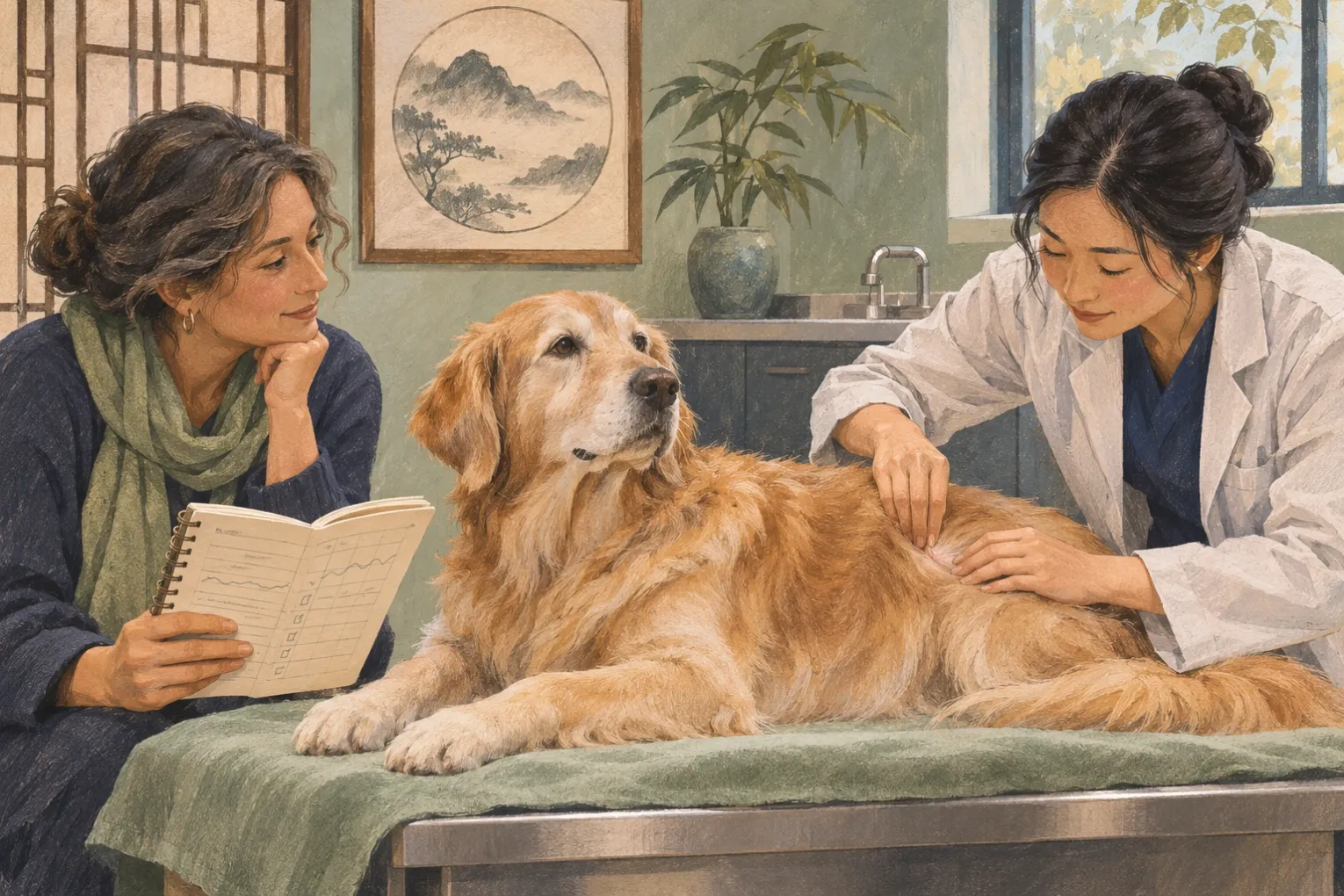
Cover: educational illustration.
Quick Answer
In integrative veterinary care, discuss a herbal adjunct only after the treating veterinarian has assessed a new flare and decided whether parasites, infection, allergy or another problem needs attention. A traditional pattern may help a TCVM clinician organise observations; it cannot determine whether skin yeast or bacteria are contributing. If a specific adjunct is considered, track itch, visible lesions and prescribed medication separately.
Get prompt local veterinary care for painful, rapidly spreading, wet or oozing lesions, or a dog that seems unwell. Breathing difficulty or collapse is an emergency; contact a local emergency service immediately rather than waiting for any remote consultation.
Two frameworks answer different questions
The AAHA allergic skin disease guideline describes a history-based workup for itchy dogs. The clinician may assess flea or mite exposure and use skin cytology, which examines material from the skin under a microscope. Detecting organisms alongside the examination can change treatment and gives a way to reassess if the dog is still itchy later. Itching alone does not tell the vet whether the underlying issue is allergy, a secondary infection, or both.
Within TCVM’s traditional framework, a clinician may interpret recurring signs alongside appetite, digestion, behaviour and other observations. If itch improves after the veterinarian addresses an infection, that is not evidence that a concurrent adjunct caused the improvement. A useful integrative discussion starts with the conventional findings and asks what an additional approach would realistically add and how its effect would be assessed.
What the canine studies can and cannot tell us
In a double-blind randomised trial of 22 dogs, a particular standardized plant preparation was evaluated alongside a veterinarian-managed glucocorticoid plan. Some itch and cumulative medication measures favoured the adjunct, but lesion severity and several other outcomes did not significantly differ. Gastrointestinal events were reported. A separate controlled study also evaluated a specified plant extract, not traditional pattern-based herbal prescribing as a whole. These studies do not demonstrate that another herbal product works, that dose can be inferred at home, or that an alternative can replace prescribed care.
| At a follow-up | Record separately | Why it matters |
|---|---|---|
| Itch and behaviour | Use the same itch scale if your vet supplies one; note sleep and licking | Home observations measure the dog's experience, not the cause of every flare |
| Lesions and clinical findings | Record the vet’s assessment and repeat cytology if the vet thinks it is indicated | A change in skin findings may call for diagnosis or treatment review |
| Prescribed medicines, diet and exposures | Record dates of changes without altering treatment yourself | Changes made together make it hard to attribute improvement |
| Adjunct and tolerance | Bring the exact product name, ingredient list and any signs of intolerance | The clinician can review potential interactions, adverse effects and whether continuing is useful |
FAQ
If my dog scratches less, can I stop the prescribed medicine?
No. Discuss any change with the treating vet. Improvement in one symptom does not confirm that lesions or infection have resolved.
Can a traditional pattern tell me which herbal product to buy?
A pattern description does not establish that a product is suitable or safe. The vet should consider the diagnosis, concurrent medicines, the specific product and a recheck plan. Do not treat this article as a prescribing guide.
Can I start with an online consultation for a new flare?
Local examination comes first when signs are new, painful, spreading or urgent. Online Veterinary Consultation may support non-urgent education after assessment; it cannot diagnose, replace an examination or provide emergency care.
Start Your OEM/ODM Project — For manufacturing inquiries only; these links do not provide veterinary services.
Become Our Distributor · pawsfuntd@gmail.com · WhatsApp +86 185 8884 5736