OEM Pet Conditioner: Decide Rinse-Off or Leave-In Before Comparing Samples
Source OEM pet conditioner by defining rinse-off or leave-in use, coat finish, application amount and packaging before approving private-label samples.
Quick Answer
For an OEM pet conditioner project, decide whether the product is rinsed out after bathing or left on as part of the brushing routine before comparing samples. These are different use systems. Approve the intended application amount, coat condition, removal step, final feel and packaging together. Do not turn a rinse-off sample into a leave-in product by changing its label.
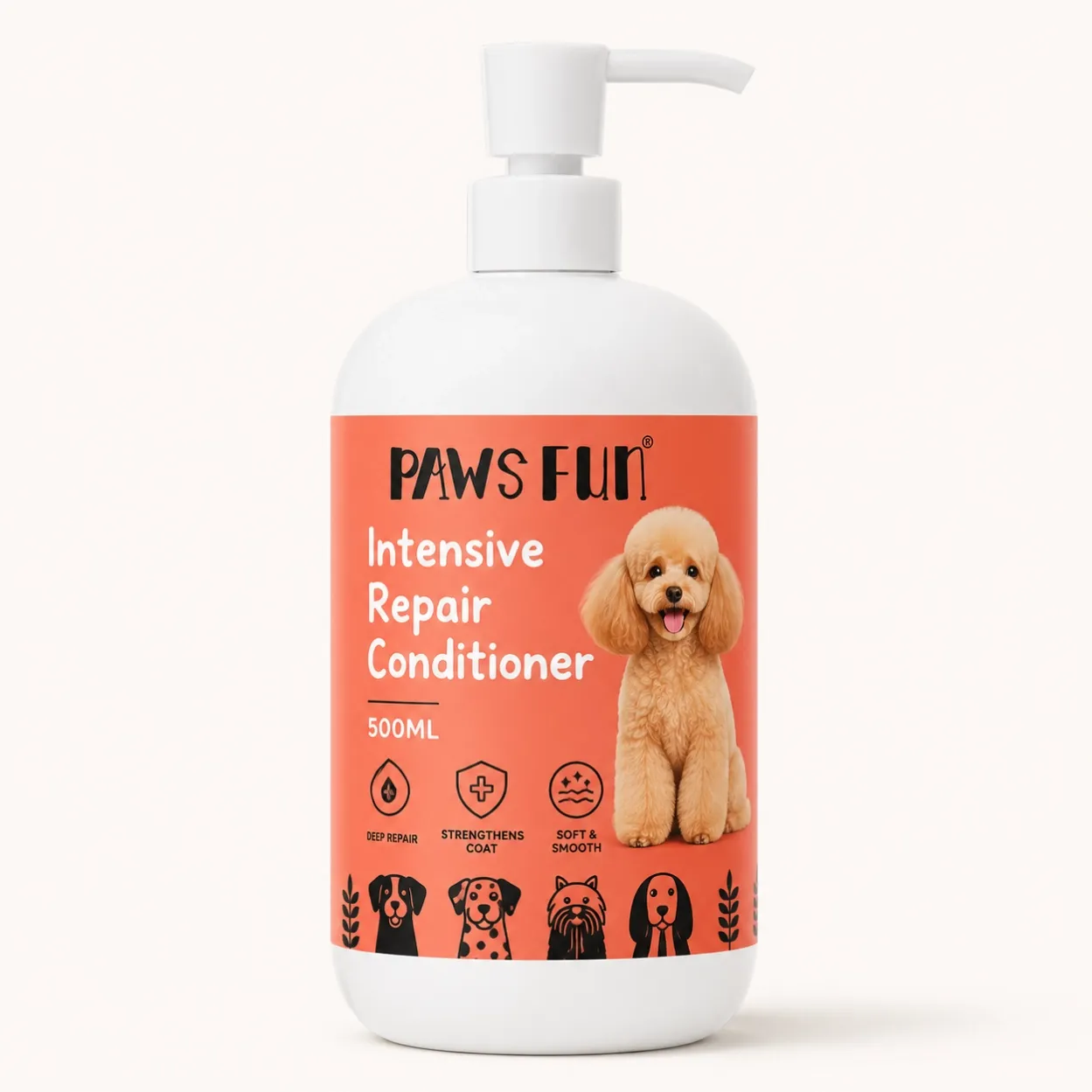
PAWS FUN offers the Intensive Repair Pet Conditioner 500ml and Detangler Leave-In Spray for Dogs & Cats 473ml as existing references. Use the current instructions for each actual product. They are separate SKUs, not interchangeable dilution or application instructions.
Start with the buyer's service or retail routine
A salon brand may want a conditioning step between shampooing and drying. A retail brand may want an easy brushing product used between baths. Write down the intended routine in plain language: what happens before application, how the product is distributed and what happens afterward. Include the intended species, coat types and user experience level.
Ask which problem the product must solve in that routine: difficult distribution, slow rinsing, heavy finish or poor brushing manageability. These observations help a factory coordinate development. A generic request for a rich conditioner leaves too much room for incompatible sample expectations.
Compare the complete use system
| Decision | Rinse-off brief | Leave-in brief |
|---|---|---|
| Application | Define the bathing-stage coat condition and approved dose. | Define where, when and how the product is applied before brushing. |
| Removal | Specify the intended rinse procedure. | Confirm that leaving the formula on is its intended, assessed use. |
| Finish | Assess the coat after rinsing and the complete drying routine. | Assess distribution, brushing, residue and final coat feel. |
| Packaging | Check dispensing with the actual conditioning formula. | Check the intended delivery pattern and repeated operation. |
| Directions | Make the removal step clear. | Make the application limits and routine clear. |
A fragrance or viscosity comparison does not replace this matrix. Agree who evaluates samples and keep the sample code visible throughout the trial. If a formula changes, repeat the relevant assessment rather than carrying forward every result from the previous version.
Define what a successful finish means
Use observable language such as easier combing under the agreed routine, acceptable coat movement and no unwanted visible residue. Record the evaluation conditions. Avoid promising the same finish across every breed, grooming method and coat condition. Do not use a cosmetic brief to make disease-treatment or universal safety claims.
Approve formula and delivery together
A technically suitable formula may perform poorly in an unsuitable dispenser. Request samples in the proposed sale pack, not only a sample jar. Check dispensing, distribution, closure handling, label readability and the ability to follow directions. The factory should determine what compatibility, stability and safety work the actual project needs; this checklist does not assert completed test results.
For a spray, distinguish spray coverage from the amount delivered. For a conditioner bottle, consider whether the user can dispense the intended amount without excessive effort or waste. These are practical sampling questions, not permission to change the confirmed 500ml or 473ml branded packs.
Prepare one clear quotation request
- State the target market and Home Use, Salon Use or combined channel.
- Choose the intended rinse-off or leave-in routine.
- Provide the relevant existing product or approved performance reference.
- Specify quantity range, pack size preference and decoration route.
- Ask for sample scope, required documents and commercial assumptions.
- Approve a versioned formula, pack and artwork before production.
Explore Home Use and Salon Use to plan the assortment. A two-step range can be appropriate, but it needs two understandable roles. Launching both formats is not automatically better than choosing the one that fits the buyer's channel.
FAQ
Can a rinse-off conditioner become leave-in by using less?
Do not assume so. The technical team must assess the intended use and issue appropriate directions for the actual formula.
Should every private-label range offer both formats?
No. Choose the routine your target buyers can understand and repeat. Add another format when its role and demand are clear.
Does PAWS FUN offer one universal conditioner MOQ?
No universal minimum is promised. Formula route, packaging and production scope determine the project proposal.
Start Your OEM/ODM Project
PAWS FUN is a pet care cosmetics brand and direct manufacturer with its own factory. We coordinate R&D, sampling, production, quality control and export cooperation for shampoos, conditioners, sprays, foams, creams, balms and professional salon formats. Formula options, MOQ, tests and lead time are confirmed for each project.
Start Your OEM/ODM Project: send your destination market, sales channel, product reference, quantity range and packaging preference. Email pawsfuntd@gmail.com or WhatsApp +86 185 8884 5736.
For our existing branded range, Become Our Distributor. Learn about OEM/ODM and About PAWS FUN. Grooming tools are accessories for qualified cosmetics projects; we do not accept independent tool OEM projects.