OEM Pet Conditioner Sample Approval: Score Slip, Rinse and Coat Feel
Approve an OEM pet conditioner by scoring spread, slip, rinsing, combability, coat feel and packaging with PAWS FUN’s own factory.
Quick Answer
Approve an OEM pet conditioner against a written use case and scorecard, not a general impression. Compare sample versions for spread, wet-coat slip, rinsing, combability, dry-coat feel, fragrance and dispensing from the intended package. Record the approved formula and package together so production has one clear reference.
PAWS FUN operates its own pet-care cosmetics factory and supports brand owners, importers, distributors, e-commerce sellers and salon programs through sampling, production, quality control and export collaboration.
Define the Conditioner’s Job
Before discussing ingredients or fragrance, define what the product should do within the range. A home-use conditioner paired with a 500ml shampoo may require simple directions and a familiar texture. A professional product may prioritize controlled use, reliable rinsing and repeatable salon results.
A development brief should include:
- intended coat type or broad-use positioning;
- rinse-off or leave-on format;
- home, salon or dual-channel use;
- desired level of slip during application;
- expected rinse behavior;
- dry-coat finish and fragrance intensity;
- bottle, closure and fill size;
- proposed claims and destination market.
Do not use “repair,” “restore” or similar words as automatic proof of structural or medical effects. Decide which statements are cosmetic descriptions and what evidence is needed for stronger claims.
Build a Repeatable Sample Scorecard
Use the same grooming procedure and observation points for each coded sample. A simple 1–5 scale can help organize observations, but the notes behind the score are more important than the number.
Application and spread
Record how easily the conditioner distributes through the wet coat. Note whether the sample feels too thin, too heavy or difficult to spread under the intended use instructions.
Wet-coat slip
Evaluate comb movement carefully and consistently. “More slippery” is not always better if the product becomes difficult to control, requires excessive rinsing or leaves an unwanted feel.
Rinsing
Use the proposed quantity and rinse method. Record how the coat feels during and after rinsing. If a professional product will have defined dilution or dosage instructions, those instructions must be evaluated rather than invented after formula approval.
Drying and combability
Observe combing, drying time, flyaway appearance and handling. Keep coat type and grooming equipment consistent when comparing samples.
Dry-coat finish
Assess softness, weight, residue, fragrance and appearance after the agreed drying period. Avoid approving a sample solely from wet-coat feel.
Control What Changes Between Samples
When several variables change at once, buyer feedback becomes difficult to interpret. Give each sample a code and keep a change log. If the first version is too heavy, specify whether the next sample should adjust texture, dosage, conditioning level or fragrance rather than asking for a completely different product.
Useful feedback looks like this:
- Sample C2 distributed well but felt heavier than the target after drying.
- Sample C3 rinsed more easily but needs the fragrance intensity reduced.
- Bottle B with closure P dispensed more consistently than Bottle A under the agreed use test.
The approved reference should identify the chosen formula, fragrance, fill size, bottle, closure, artwork and directions. A photograph alone is not a complete production specification.
Match the Product to the Channel
A salon buyer may value consistency across frequent grooming sessions, while a retail buyer may prioritize simple use instructions and compatibility with the companion shampoo. The formulation brief should not pretend these channels are identical.
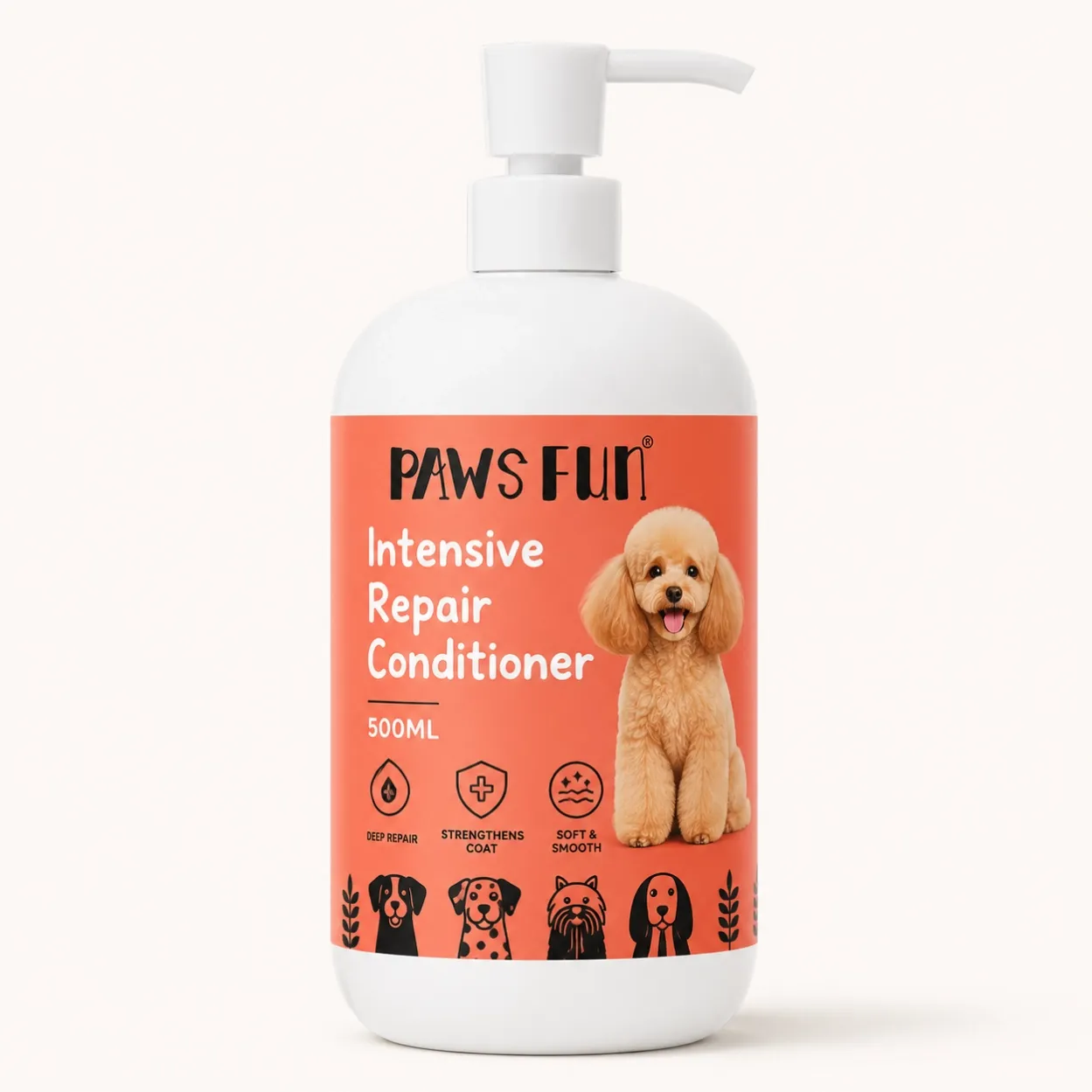
Review Intensive Repair Pet Conditioner 500ml as a current PAWS FUN portfolio reference. For a broader between-bath range, Coat Shine & Anti-Static Finishing Spray 250ml illustrates a different leave-on format. These products are references only; private-label development requires separate confirmation.
Check Claims Before Artwork
Conditioner copy should stay within supported cosmetic functions unless stronger evidence and regulatory review are available. The FDA animal-grooming guidance is useful for understanding the distinction between cleansing/beautifying positioning and therapeutic intent, but it does not approve an individual formula or claim. See FDA CPG Sec. 653.100.
Before artwork approval, confirm:
- product identity and intended use;
- directions that match the approved sample;
- warnings and avoidance areas;
- ingredient-list and language requirements for the destination market;
- business/contact information;
- claim substantiation and local review responsibilities.
FAQ
How many conditioner samples are needed?
There is no universal number. The development path depends on how clear the first brief is, how many variables change, and whether the formula and packaging meet the agreed criteria.
Can a home-use conditioner become a salon product by changing the bottle size?
Not automatically. Professional instructions, use economics, dispensing and channel expectations may require separate review.
Can PAWS FUN provide a fixed MOQ without the brief?
MOQ depends on formula, packaging, artwork and order structure. Send the project details for a specific quotation.
Can tools be added to a salon launch?
Tools may support a qualifying cosmetics project as accessories or promotional items. Standalone tool OEM is not offered.
Start Your OEM/ODM Project
Start Your OEM/ODM Project with the target coat type, channel, formula expectations, packaging idea and estimated quantity.
For PAWS FUN branded supply, Become Our Distributor.
Email pawsfuntd@gmail.com or contact WhatsApp +86 185 8884 5736.