Pet Care Cosmetics OEM Manufacturer: Bridge the Laboratory Sample and First Production Batch
Evaluate a pet care cosmetics OEM manufacturer with a practical lab-to-first-batch approval plan covering formula versions, packaging and quality decisions.
Quick Answer
A pet care cosmetics OEM manufacturer should connect the approved laboratory sample to the first production batch through a documented formula version, component specification and agreed release checks. Approving a sample does not automatically approve every later process or packaging change. Define how the first batch will be compared with the approved reference before committing to commercial production.
Agree what the sample approval actually means
A buyer may approve scent and coat feel while the factory is still reviewing the proposed sale pack. Another buyer may approve a bulk sample but not the final artwork. Record those approvals separately. A single approved message should not be interpreted as permission to change ingredients, containers, quantities or directions.
Use the PAWS FUN Doodle & Curly Coat Shampoo 500ml and Intensive Repair Pet Conditioner 500ml as existing references when discussing the workflow. Their actual manufacturing records and formula information are not disclosed or inferred by this article.
Prepare a sample-to-production handover sheet
| Item | Record before production |
|---|---|
| Formula identity | Released revision and responsible technical approval. |
| Sample identity | Code, date and the agreed reference sample or record. |
| Product criteria | The observations and relevant specifications that define acceptance. |
| Packaging | Released bottle, closure, fill quantity, label and carton configuration. |
| Artwork | Final reviewed version and destination-market content approval. |
| First-batch decision | Required records, comparison scope, approver and release timing. |
This sheet organizes responsibilities. It does not prescribe a universal manufacturing method, test threshold or inspection standard. The responsible factory team should determine the appropriate technical controls for the formulation and process.
Define the purpose of an intermediate batch
Ask whether an intermediate or pilot stage is appropriate for the project, what it is intended to demonstrate and what it costs. Do not demand a pilot for every stock-formula order or assume that every custom formula can go directly from a small sample to an unrestricted production run.
If the stage is proposed, specify what will be observed and how the result affects the decision. A pilot described only as a small batch does not explain whether it evaluates process handling, product characteristics, filling or another defined issue.
Keep comparisons relevant and reproducible
Use the agreed methods and conditions when comparing the first-batch material with the approved reference. A buyer's visual impression can be useful, but it should not replace agreed technical measurements where those are needed. Appearance, smell, consistency and dispensing may all be relevant depending on the product.
Record the time and conditions of assessment. Comparing a newly prepared production sample with an older laboratory sample under different storage conditions can confuse the interpretation. Ask the technical team to explain any difference before accepting or rejecting the batch.
Include the filled sale pack
A bulk sample and a retail unit answer different questions. Check that the released formula is filled into the released packaging configuration, with the correct declared quantity and artwork. Review dispensing, closure handling and relevant compatibility information for the actual pack.
A shampoo and a conditioner can need different handling and delivery considerations even when their bottles look similar. Approve each SKU's configuration. Do not assume that one component approval covers an entire collection with different contents.
Decide what happens when a difference appears
Agree the escalation path before production. Identify who reviews the observation, what evidence is needed and whether the lot is held while the issue is assessed. A shipment deadline should not silently replace the agreed acceptance decision.
If a revision is necessary, link the revised specification and supporting approval to the affected order. Keep the earlier reference identifiable. Buyers need a repeatable sourcing record, not just a favorable photograph of the first batch.
Compare manufacturers on scope and accountability
Ask what the quotation includes for sample development, technical review, packaging confirmation and first-batch release. Two offers with the same unit quantity may have different assumptions. Review OEM/ODM and About Us, then send a versioned brief through Contact Us.
FAQ
Does laboratory sample approval guarantee identical observations in every batch?
No universal guarantee is made. Agree suitable acceptance criteria and a responsible process for reviewing differences.
Is a pilot batch mandatory for every project?
Its need and scope depend on the formula, process and order. Ask the technical team to explain the proposal.
Can we release the first batch from appearance alone?
Only the agreed release scope determines the decision. Appearance alone does not establish all technical or packaging requirements.
Start Your OEM/ODM Project
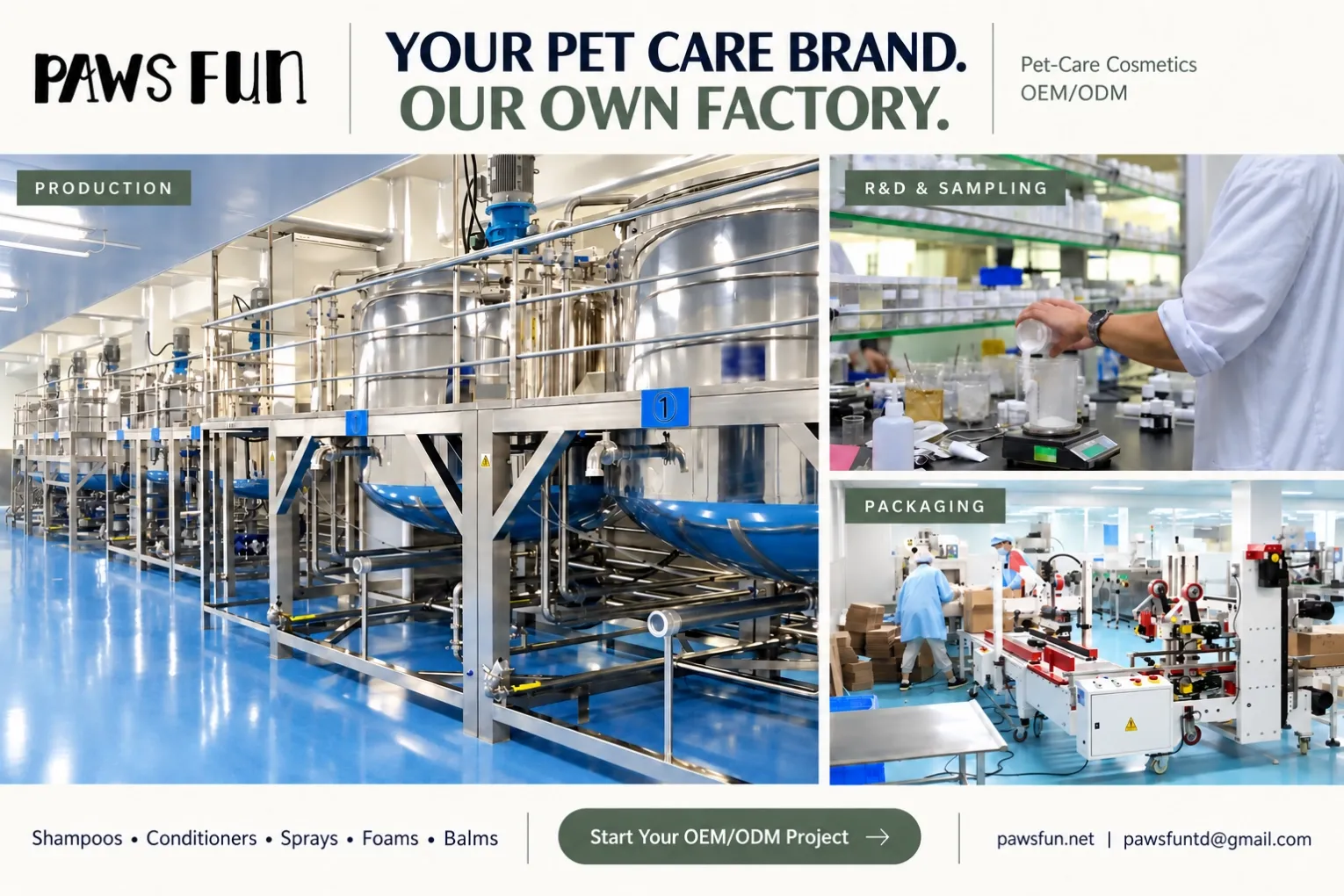
PAWS FUN is a pet care cosmetics brand and direct manufacturer with its own factory. We coordinate R&D, sampling, production, quality control and export cooperation for shampoos, conditioners, sprays, foams, creams, balms and professional salon formats. Formula options, MOQ, tests and lead time are confirmed for each project.
Start Your OEM/ODM Project: send your destination market, sales channel, product reference, quantity range and packaging preference. Email pawsfuntd@gmail.com or WhatsApp +86 185 8884 5736.
For our existing branded range, Become Our Distributor. Learn about OEM/ODM and About PAWS FUN. Grooming tools are accessories for qualified cosmetics projects; we do not accept independent tool OEM projects.