Pet Care OEM Fragrance Sampling: Use Coded Comparisons Before Naming the Winner
Compare pet-care OEM fragrance samples using coded versions, consistent conditions and recorded feedback. Approve the final formula and pack together.
Quick Answer
Evaluate pet-care OEM fragrance options as coded finished-formula samples under agreed conditions. Separate scent preference from intensity, application performance and technical suitability. Record which sample version each comment refers to, then approve one formula, fragrance and package combination. A preferred smell is not evidence of safety, stability or odor-control efficacy.
PAWS FUN is a pet-care cosmetics brand and direct manufacturer with its own factory. We coordinate R&D, sampling, production, quality control and export collaboration for shampoos, conditioners, sprays, foams, creams and professional salon formats.
Define the Use Context
A rinse-out conditioner and a leave-on finishing spray create different evaluation questions. Identify the intended species, use area, professional or home channel and proposed label directions. Do not choose a fragrance merely because it performs well in a human-care product or on a paper strip.
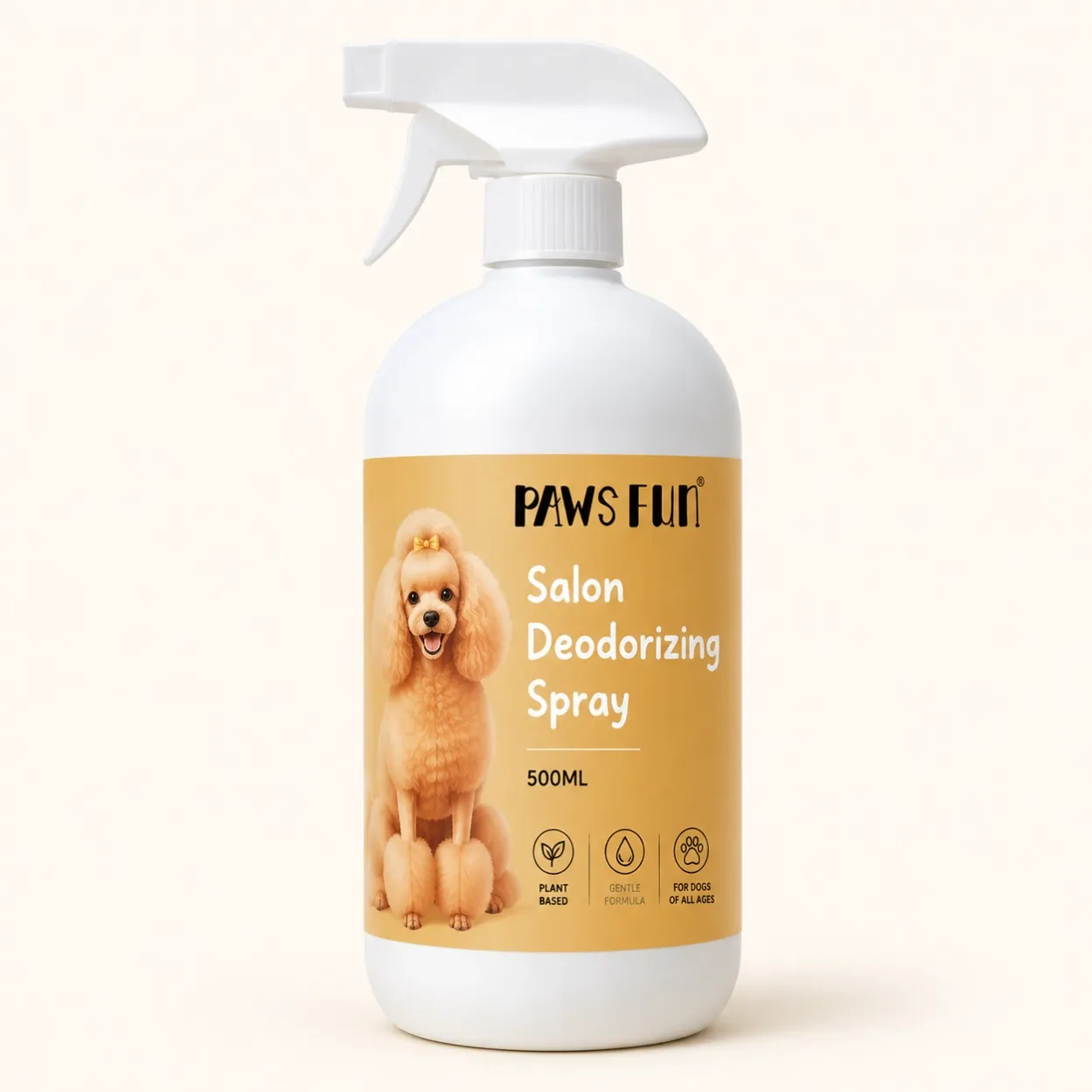
Compare the format requirements of Salon Pet Deodorizing Spray 500ml and Intensive Repair Pet Conditioner 500ml. These are existing product references; alternative fragrance proposals require their own review and do not change the currently approved PAWS FUN products.
Use a Small, Traceable Sample Set
Ask the factory to identify each formula version and provide coded samples for review. Keep the sample-to-formula mapping with the project coordinator. Coded presentation can help reviewers focus on what they observe rather than an attractive fragrance name. It is a practical feedback method, not a substitute for a controlled efficacy study.
| Record | Useful question |
|---|---|
| Sample identity | Which code and revision was assessed? |
| Initial impression | How would the reviewer describe it without marketing names? |
| Intensity | Does it fit the agreed product routine? |
| Later impression | What changed at the agreed observation point? |
| Other performance | Was application, appearance or coat feel different? |
Keep Evaluation Conditions Consistent
Agree an appropriate assessment method with the technical team. Record the sample amount, application method and observation timing rather than improvising different routines. Do not begin animal-use testing without suitable instructions and approval. If a reviewer changes the method, preserve that note with the feedback.
Close the Feedback Loop
Submit a short ranked comparison with reasons. Distinguish a preference such as “less intense” from a functional concern such as an altered spray pattern. Request a defined revision rather than combining several informal comments into an unspecified change. Keep an approved reference and identify which earlier versions are superseded.
Before production, confirm the final formula and fragrance reference, package compatibility work, necessary safety documentation, label wording and production approval. Quantities, costs and timing should refer to this agreed scope. Fragrance substitutions must return to review instead of being treated as automatically equivalent.
FAQ
Does a light smell mean fragrance-free?
No. Agree the intended definition and formula requirements; scent strength alone cannot establish an ingredient exclusion.
Can we promise long-lasting odor removal?
Only use claims supported for the finished product. Scent preference testing cannot establish odor-removal performance.
Can the brand select a fragrance first?
It can select a direction, but final approval should refer to the actual formula and package.
Discuss Your OEM/ODM Project
Start Your OEM/ODM Project with your destination market, channel, product direction, estimated quantity and launch timing. Review our OEM/ODM process and Products.
For branded supply, Become Our Distributor.
Email pawsfuntd@gmail.com or contact WhatsApp +86 185 8884 5736.