Private Label Curly Coat Dog Shampoo: 12 Decisions Before Sample Approval
Build a private-label shampoo for doodles and curly coats with PAWS FUN’s own factory. Compare cleansing, curl definition, fragrance, packaging and sample tests.
Quick answer
A strong curly-coat shampoo project begins with a precise performance brief—not a list of fashionable ingredients. Before sampling, define the target coat types, cleansing level, desired slip, curl finish, fragrance direction, retail or salon use, bottle size and permitted claims. The sample should then be assessed on wetting, lather, rinse speed, combing, drying time, curl definition and residue. PAWS FUN can coordinate these steps through its own pet-care cosmetics factory, from R&D and samples to production and quality control.
Why curly-coat positioning needs its own brief
Doodles, poodles, bichons and other curly-coated dogs can vary widely in coat density, texture, grooming frequency and home-care routine. A buyer should therefore avoid treating “curly coat” as a single technical specification. The project brief needs to describe the intended user and the expected grooming result.
A home-use shampoo may prioritize easy lather, straightforward rinsing and a pleasant after-bath feel. A professional salon format may prioritize concentrated use, controlled foam, fast rinsing and predictable combability across repeated appointments. These goals can overlap, but they should not be assumed to be identical.
The 12 decisions to make before sampling
1. Define the target coat and customer
State whether the product is aimed at loose waves, dense curls, fleece-type coats or a broader mixed curly-coat range. Also identify whether the primary customer is a pet owner, independent groomer, salon chain or distributor.
2. Choose the cleansing level
Daily-home-care positioning generally calls for a gentler cleansing profile than a first-wash salon product. Tell the factory whether the main problem is everyday dirt, product buildup, odor or frequent washing. Avoid requesting “maximum cleansing” and “ultra-gentle daily use” in the same brief without defining how success will be measured.
3. Describe the desired curl finish
Useful development language includes “soft and defined,” “lightweight and springy,” or “smooth with controlled volume.” Avoid vague instructions such as “make curls perfect.” A visual reference and a combing test are more actionable.
4. Decide how much slip the shampoo should provide
Too little slip can make wet handling difficult, while too much deposition may leave some coats feeling heavy. Buyers should compare the shampoo alone and as part of a shampoo-plus-conditioner routine.
5. Set fragrance direction and intensity
Confirm fragrance family, target intensity during use, desired after-rinse character and whether a fragrance-free option is required. Final wording should follow the target market’s ingredient and allergen-label rules.
6. Confirm color and appearance
Clear, pearlescent and opaque formats create different shelf impressions. Color should remain stable under the planned storage and packaging conditions. A decorative appearance must not be allowed to obscure stability or compatibility questions.
7. Select retail or salon packaging
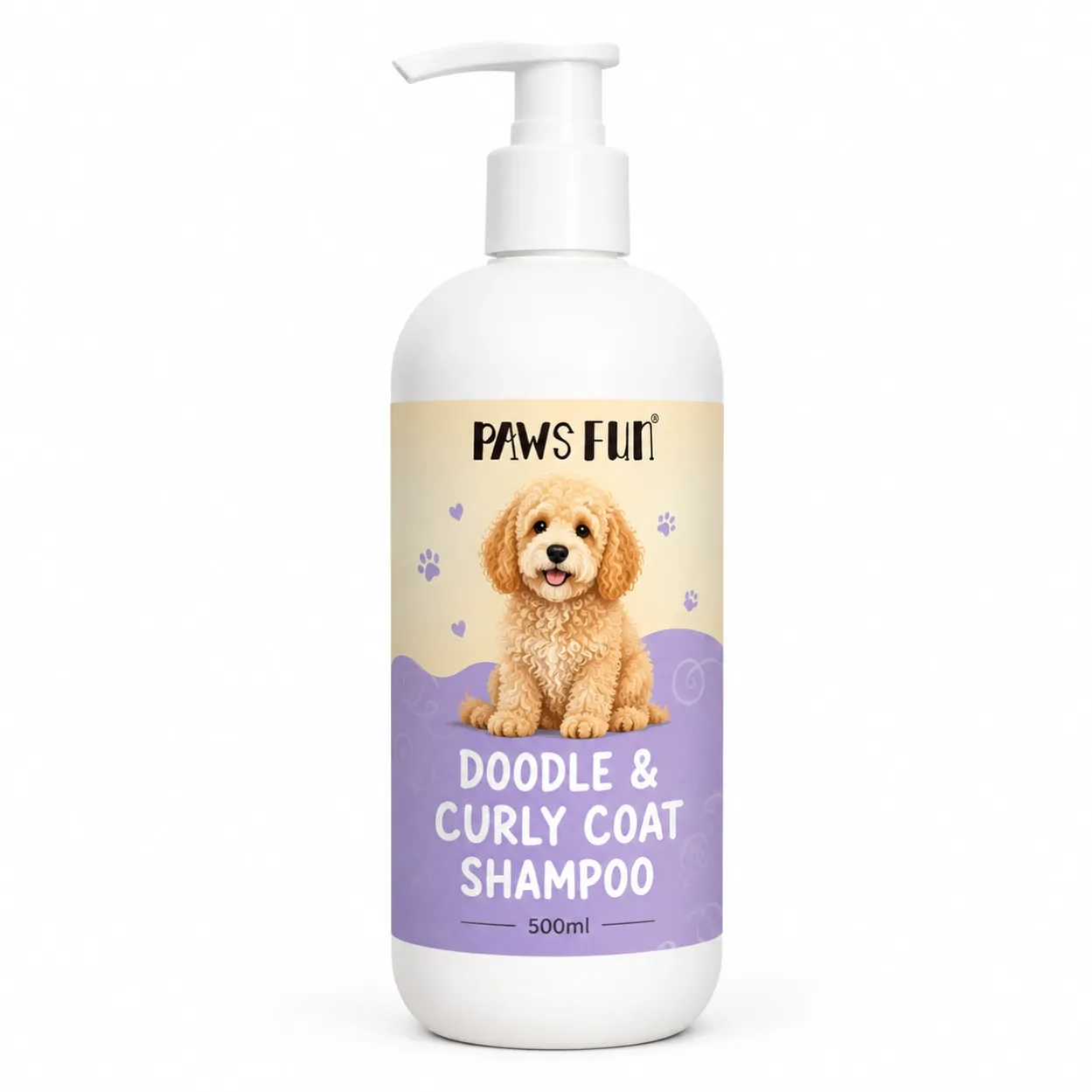
For home use, a 500ml bottle can support the existing PAWS FUN range. Professional buyers may discuss larger or concentrated formats only after confirming formula suitability, directions and cost-per-use assumptions. Bottle, cap and label materials should be tested with the final bulk formula.
8. Write measurable sample criteria
Create a scorecard covering wetting, lather, spread, rinse, wet combing, dry combing, drying time, curl appearance, softness, residue and fragrance. Use the same wash protocol for every sample comparison.
9. Control cosmetic claims
Claims should stay within substantiated cleansing and beautifying functions unless the buyer has a separate regulatory pathway and evidence. In the United States, the FDA’s animal-grooming-aid policy specifically addresses products intended solely to cleanse or beautify animals. Disease-treatment, anti-inflammatory, medicated or therapeutic claims can change the regulatory analysis.
10. Confirm artwork responsibilities
Decide who supplies brand assets, barcode, warning text, directions, ingredient format and market-specific language. PAWS FUN can coordinate packaging and artwork development, but the brand owner or importer must confirm requirements for the destination market.
11. Approve the whole system, not only the liquid
Sample approval should include the filled package, closure, label adhesion, transport risk and dispensing experience. A formula that performs well in a laboratory container may behave differently in the chosen bottle and pump.
12. Lock the approved reference
Record the approved sample code, appearance, fragrance, packaging components, artwork version and signed specifications before bulk production. This creates a practical reference for incoming materials, filling and final quality review.
A practical sample evaluation routine
Use representative dogs with owner consent and a consistent grooming protocol. Record coat type, dilution if any, water temperature, amount used, lather time, rinse time, dryer method and finish. Do not test on irritated, wounded or medically abnormal skin without veterinary direction. Product development observations are not veterinary diagnosis.
Why work directly with PAWS FUN
PAWS FUN combines brand experience with direct own-factory manufacturing. Buyers can discuss product positioning, sample goals, packaging, production and quality checkpoints with one project team. This is especially helpful when building a coordinated shampoo, conditioner and leave-in range rather than purchasing unrelated items from multiple sources.
Frequently asked questions
Can I copy a competing doodle shampoo?
PAWS FUN can review the performance and positioning you like, but the project should develop its own lawful formula direction, artwork and claims. A competitor’s confidential formula, trademarked design or unsupported claims should not be copied.
Is a conditioner always necessary?
Not every coat or grooming routine needs the same level of conditioning. For a coordinated retail range, however, evaluating the shampoo with a compatible conditioner gives buyers a clearer picture of combability and finish.
Can I request a fragrance-free sample?
Yes, a fragrance-free direction can be discussed. “Fragrance-free,” “unscented” and “hypoallergenic” are not interchangeable claims; the final label must reflect the tested product and target-market rules.
Can tools be private-labeled with this project?
Tools may be considered only as a supporting item within a qualifying pet-care cosmetics OEM/ODM order. PAWS FUN does not accept standalone tool-only OEM projects.
Related PAWS FUN links
- Doodle & Curly Coat Shampoo 500ml: https://pawsfun.net/products/pawsfun-doodle-curly-coat-shampoo-500ml
- Intensive Repair Pet Conditioner 500ml: https://pawsfun.net/products/pawsfun-intensive-repair-pet-conditioner-500ml
- Coat Shine & Anti-Static Finishing Spray 250ml: https://pawsfun.net/products/pawsfun-coat-shine-anti-static-finishing-spray-250ml
- Private Label — Home Use
- Private Label — Salon Use
- About Us / Why Choose Us / Contact Us
Call to action
Start Your OEM/ODM Project: Send your target market, buyer type, desired product, expected quantity and launch timing to pawsfuntd@gmail.com or WhatsApp +86 185 8884 5736. PAWS FUN will help organize the brief for its own pet-care cosmetics factory.
Become Our Distributor: Buyers who prefer ready PAWS FUN products can also ask about regional distribution and a focused curly-coat care assortment.
Explore PAWS FUN
Private Label — Home Use · Private Label — Salon Use · About Us · Why Choose Us · Contact Us · FAQ · Products · Become Our Distributor · Online Vet Consultation